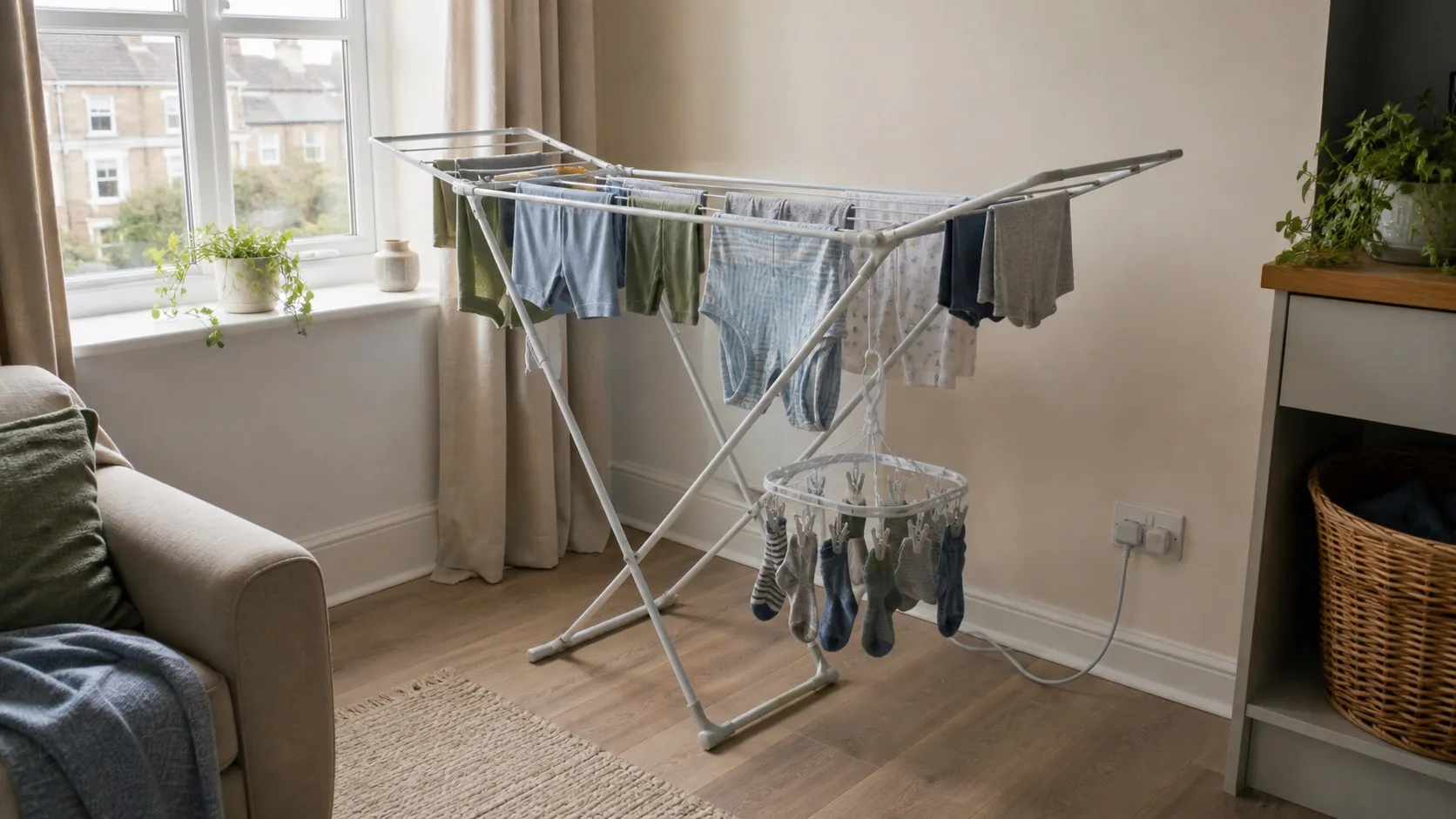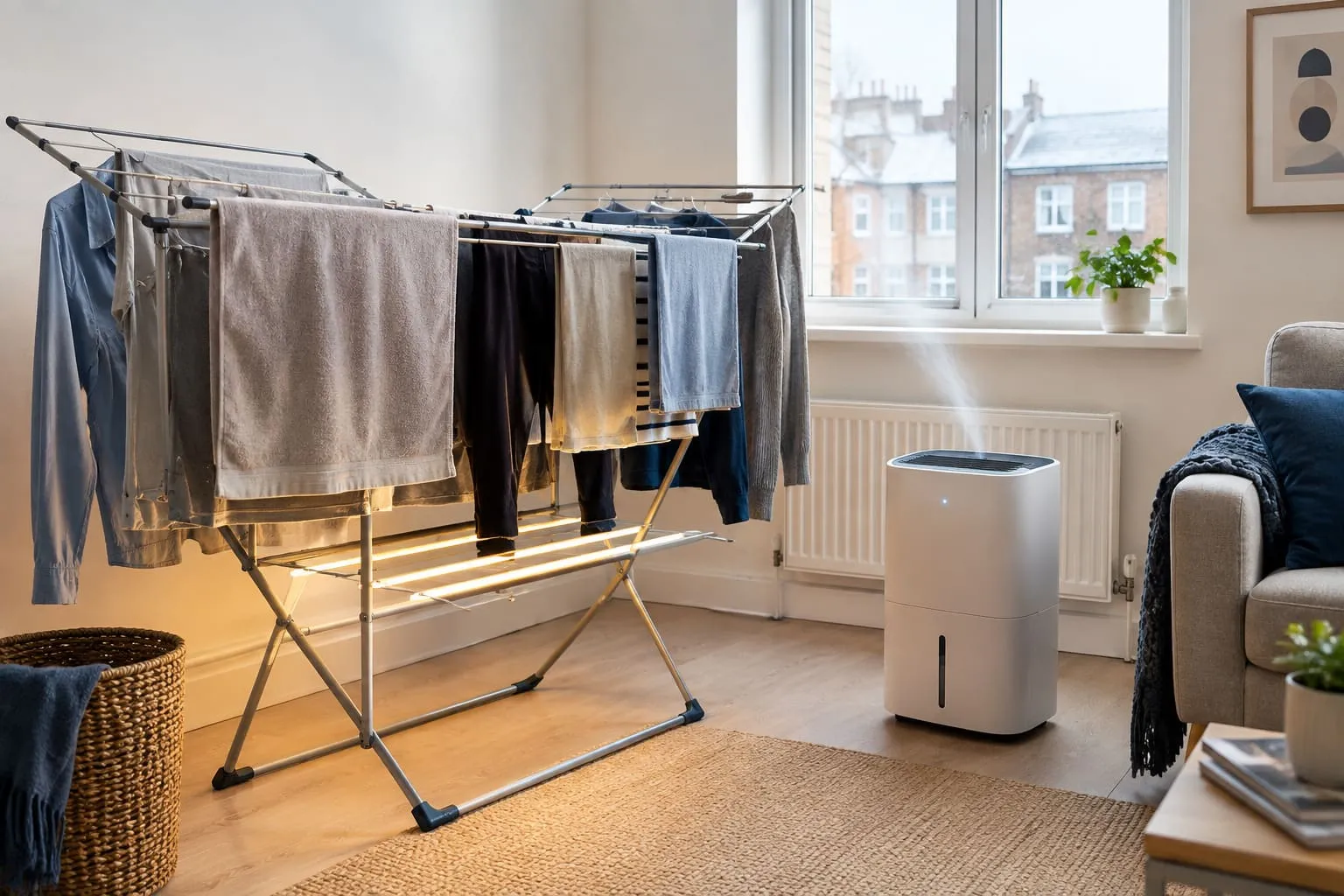
If you are comparing a heated airer vs dehumidifier for drying clothes, the key difference is simple: a heated airer helps water leave the fabric, while a dehumidifier helps that water leave the room.
That is why neither appliance is a perfect substitute for the other. A heated airer can make laundry dry faster but does not remove the moisture released into your home. A dehumidifier lowers the room’s humidity and moves drier air around the washing, but it does not directly heat each shirt, towel or pair of jeans.
Our short verdict: if condensation is already appearing on your windows, buy a dehumidifier first. If your home is already reasonably warm and dry and you simply want faster drying, a heated airer is a good fit. If you regularly dry full loads indoors through a UK winter, using both together is the strongest setup.
Heated airer vs dehumidifier: quick comparison
| Compare | Heated airer | Dehumidifier |
|---|---|---|
| Main job | Warms wet laundry | Removes moisture from the air |
| Helps with condensation | No, not by itself | Yes |
| Needs a separate airer | No | Yes |
| Noise | Virtually silent | Fan and compressor noise |
| Floor space | Larger while loaded | Smaller appliance, but still needs an airer |
| Best for | Faster drying in a dry home | Laundry drying plus humidity control |
| Best combined setup | Heat the clothes | Remove the released moisture |
The most important point is the moisture balance. A normal wash load contains a surprising amount of water after the spin cycle. Wherever you dry it, that water has to go somewhere.
Outdoors, it disappears into the outside air. Indoors, it either leaves through ventilation or is collected by a dehumidifier. Heating the clothes faster does not remove that second part of the problem.
What does a heated airer actually do?
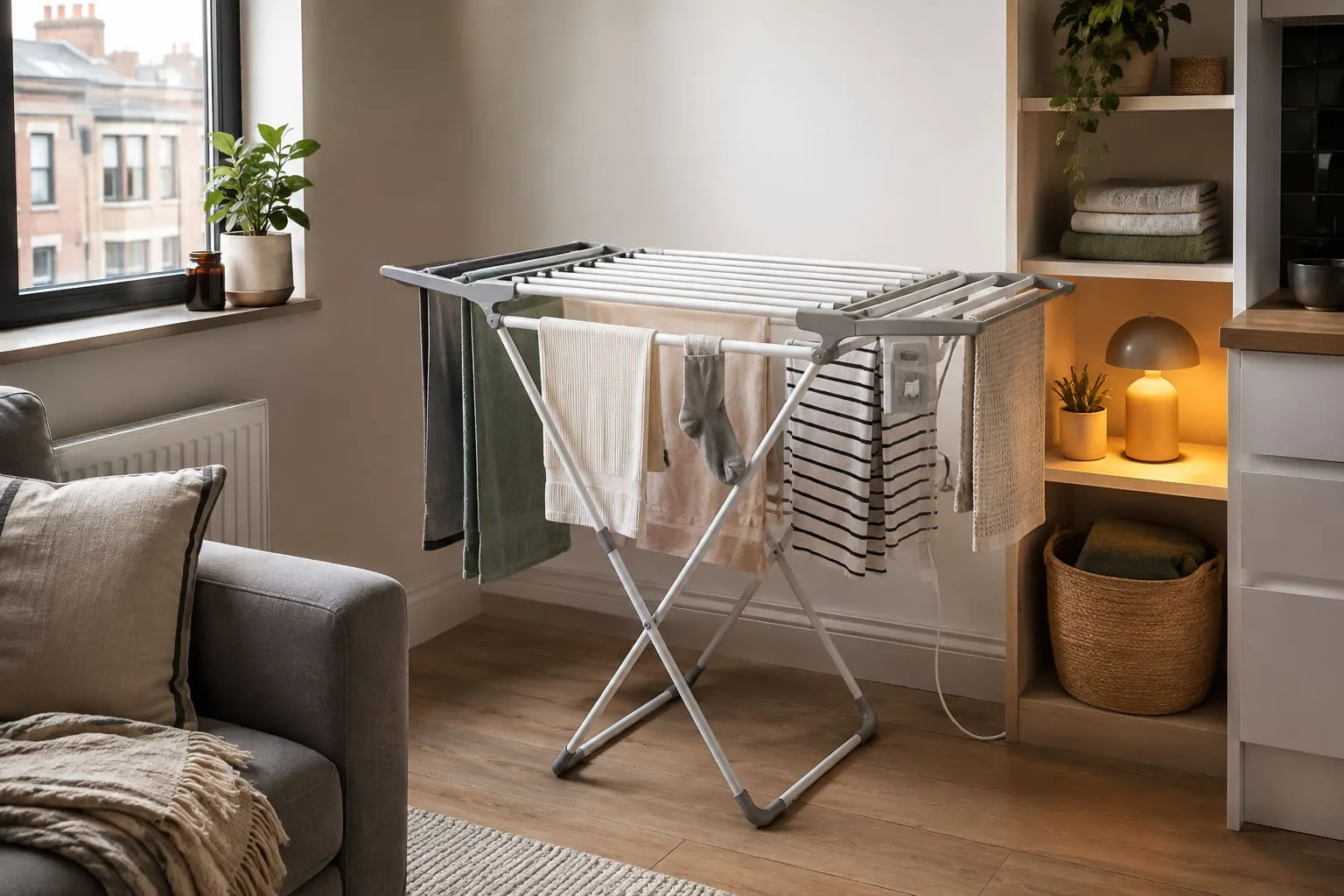
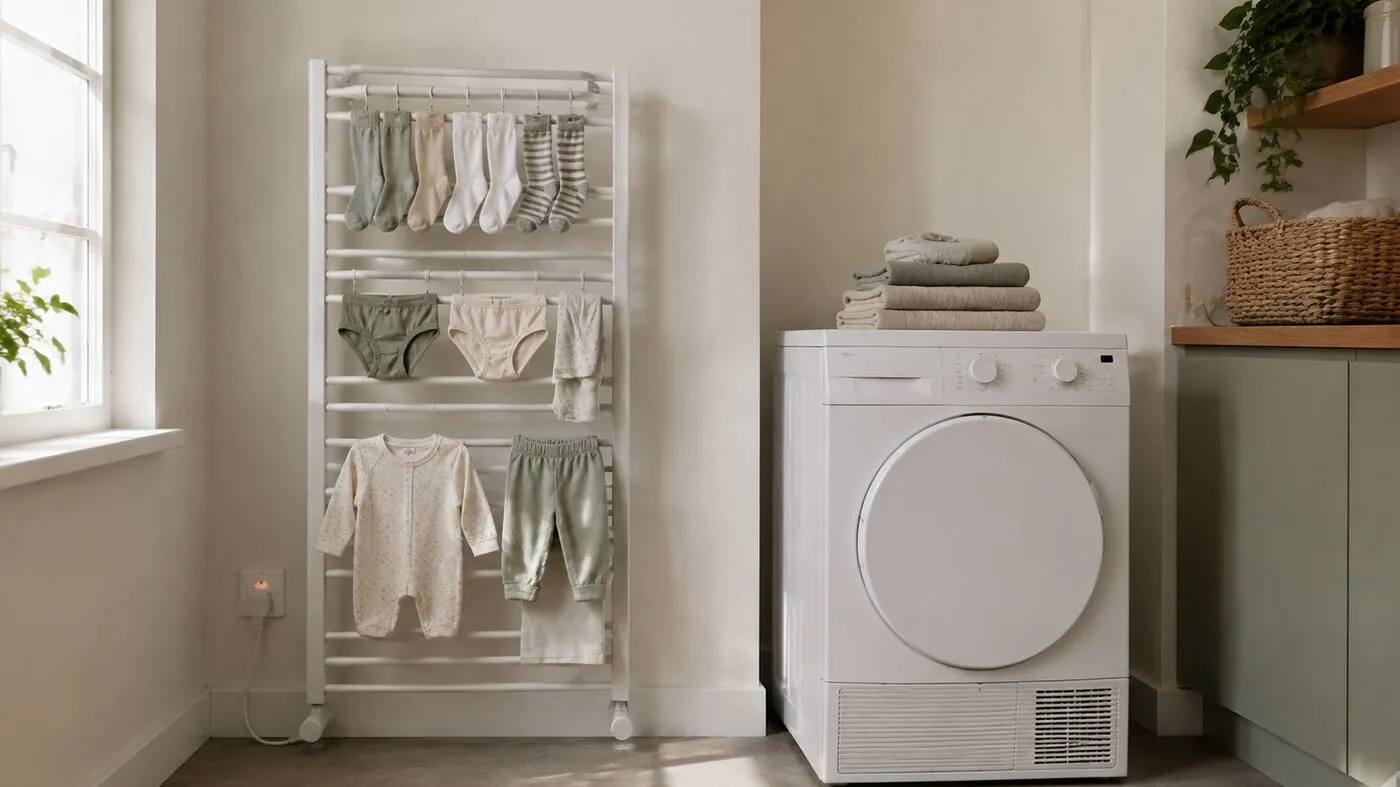
A heated airer looks much like a normal folding clothes rack, but its rails warm up when plugged in.
The extra heat raises the temperature of the fabric touching or sitting close to the rails, which speeds evaporation. This is particularly useful in winter when an ordinary airer can leave thicker clothes damp for a day or more.
A model such as the Lakeland Dry:Soon 3-Tier Heated Clothes Airer is rated at 300W and provides around 21 metres of drying space. That makes it useful for a full load in a flat where a tumble dryer would take up too much permanent space.
There are two limitations to understand before buying one.
First, the warmest areas are usually the parts of the garment closest to the heated rails. Towels, jeans, waistbands and other thick sections may need repositioning for an even dry.
Second, all of the water that evaporates from the washing still enters the room. If your windows already collect condensation every morning, a heated airer alone does not solve the underlying moisture problem.
A properly designed heated-airer cover can improve performance by keeping more warm air around the laundry. If you use one, use a cover intended for your model and follow the manufacturer’s instructions rather than blocking ventilation around the appliance.
For our current picks, see the best heated airers for small flats.
What does a dehumidifier do for laundry?
A dehumidifier attacks the same drying process from the other side.
Instead of heating the clothes directly, it draws damp room air through the appliance, removes water from it and blows drier air back into the room. That lower-humidity air can then accept more moisture from the washing.
Models with a dedicated laundry mode normally prioritise moisture extraction and fan speed for a period of time. This can be especially useful in a small spare room, bedroom or utility space where you can shut the door and create a controlled drying zone.
The MeacoDry Arete One 12L, for example, has a rated power consumption of 151W at 20°C and 60% relative humidity and includes a laundry mode. Real consumption and drying time will still vary with temperature, starting humidity, load size and how well the clothes are spaced.
A dehumidifier also gives you a benefit after the washing is dry: you can continue to use it for condensation and excess household humidity.
The downside is that you still need something to hang the clothes on, and the appliance is not silent. There is fan noise and, on compressor models, compressor noise.
See our best dehumidifiers for drying clothes if moisture control is your main reason for buying.
Which is cheaper to run: a heated airer or dehumidifier?
There is no universal “cheapest per load” winner because the answer depends on the wattage of the appliance and how long it has to run.
The cleanest way to compare them is:
running cost per hour = appliance power in kW × your electricity unit rate
For example, at a hypothetical electricity rate of 25p per kWh:
- a 300W heated airer would cost about 7.5p per hour
- a 151W dehumidifier would cost about 3.8p per hour at that stated operating point
But that does not mean the dehumidifier will always cost half as much to dry a load. A dehumidifier’s compressor may cycle as humidity changes, while a heated airer can run continuously. Drying time also changes substantially with room temperature, washing-machine spin speed, fabric thickness, load spacing and airflow.
For that reason, we would not choose between them on hourly wattage alone.
If your flat already has a condensation problem, the dehumidifier’s electricity is doing two jobs: helping the washing dry and removing moisture that would otherwise remain in the home. If your flat is dry and well ventilated, a low-wattage heated airer can be the simpler purchase.
Which dries clothes faster?
For a typical rail-style heated airer versus a good laundry-mode dehumidifier, there is no reliable fixed number of hours that applies to every home.
A heated airer speeds the process most where fabric is close to the warm rails. A dehumidifier works more indirectly, but its airflow and lower room humidity can affect the whole load at once.
The quickest non-tumble-dryer approach is usually to combine heat, low humidity and airflow.
Before buying another appliance, also check the basics:
- use the fastest spin speed that is suitable for the garments
- leave gaps between items instead of packing the rack tightly
- open shirts, waistbands, pockets and folded-over sections
- keep the drying rack away from cold external walls where possible
- rotate thick items if one side stays damp
Those small changes often save more drying time than simply leaving an appliance running for extra hours.
Should you use a heated airer and dehumidifier together?
Yes. For many small UK homes, this is the most effective setup.
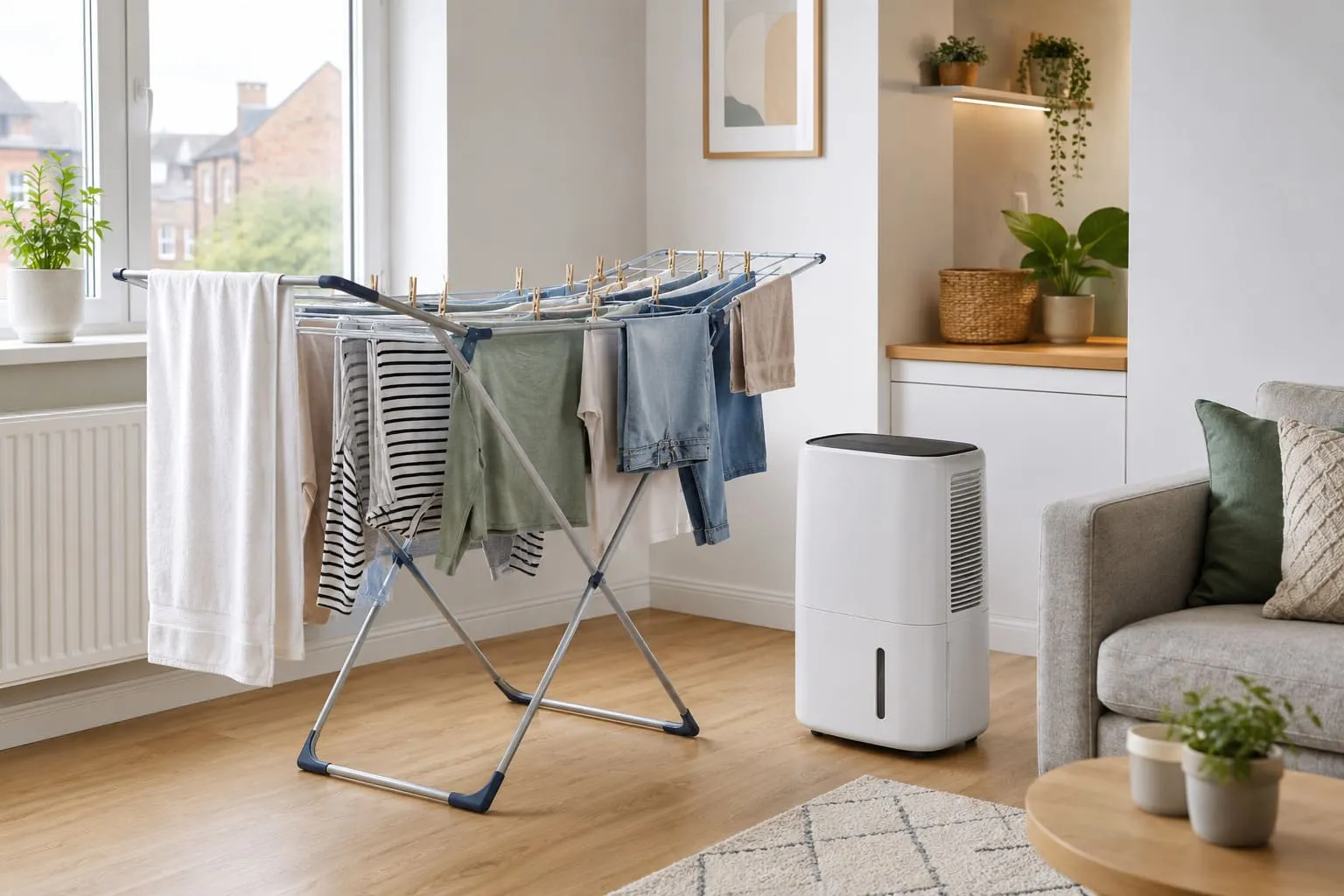
The heated airer increases evaporation from the laundry. The dehumidifier removes the water vapour and recirculates drier air. Each appliance deals with the weakness of the other.
For best results:
- Put the laundry and appliances in the smallest practical room with enough safe clearance.
- Close the door and keep the window closed while the dehumidifier is running so it is not continually trying to dry incoming outside air.
- Position the dehumidifier so its dry-air outlet can move air towards or across the washing, while following the manufacturer’s clearance guidance.
- Do not hide the dehumidifier underneath an airer cover or block its air inlet or outlet.
- Space garments so air can pass between them.
- Empty the tank before a long drying session, or use continuous drainage if your model supports it and you have a suitable drain.
This turns one room into a temporary drying zone instead of allowing humid laundry air to spread through the whole flat.
What if I can only buy one?
Buy the dehumidifier first if your windows already stream with condensation
This is the clearest case.
If you are already wiping water from bedroom windows, finding damp patches around reveals or worrying about mould, your home does not just have a slow-drying problem. It has a moisture-management problem.
A dehumidifier helps with both.
You can use it with the ordinary clothes horse you already own, which also means you are not paying for another set of rails.
For more on the underlying issue, read how to stop condensation in a UK flat.
Buy the heated airer first if your home is warm and generally dry
If your windows are mostly clear, you dry only a few loads a week and you have a sensible way to ventilate the room, a heated airer is a straightforward upgrade from a standard rack.
It is quiet, simple to use and folds away when you do not need it.
If you use a heated airer without a dehumidifier, the moisture still needs an escape route. That can mean using an extractor fan or ventilating the room when conditions allow rather than sealing the room and letting humidity build.
Buy the dehumidifier first if you already own a decent clothes airer
This is an easy one to overthink.
If you already have enough hanging space, another rack does not fix the missing part of the system. Adding moisture removal and airflow is likely to make a bigger difference than replacing a perfectly usable unheated airer.
Use both if indoor laundry is a regular winter routine
For households without a tumble dryer, the combined setup is less about buying two gadgets for one job and more about recreating the three things outdoor drying gives you naturally: warmth, dry air and air movement.
That makes it particularly useful from autumn through early spring, when opening windows for hours is uncomfortable and an ordinary rack can remain damp overnight.
Heated airer vs dehumidifier for a small flat
Floor space changes the decision.
A tiered heated airer can hold a large load vertically and fold thin when stored, but it still occupies a noticeable patch of floor while in use. A dehumidifier itself has a smaller footprint, although you need to add the footprint of your existing clothes rack.
If storage is extremely tight and you already own a folding airer, a compact dehumidifier may add more capability without introducing another bulky drying frame.
If you have nowhere to store a rigid appliance but can slide a folded rack behind a door or wardrobe, the heated airer may be easier to live with.
Measure the in-use dimensions, not just the folded size. The appliance that fits neatly in a product photo can feel very different once it is loaded with shirts, towels and bedding in a real bedroom.
What about a cold room?
Room temperature matters, especially for dehumidifiers.
Many popular domestic units are compressor dehumidifiers, and their extraction performance changes with temperature and humidity. If the only place you can dry washing is genuinely cold, compare the manufacturer’s operating range and consider whether a desiccant dehumidifier is more appropriate for that space.
Do not assume a quoted “litres per day” figure will be achieved in your spare room in January. Those ratings are measured under specified test conditions.
A heated airer can be useful in a cooler room because it adds heat directly around the washing, but you still need to deal with the moisture released.
Our recommendation
For most readers choosing between a dehumidifier or heated airer, we would make the decision in this order:
Choose a dehumidifier first if indoor laundry is contributing to condensation, damp smells or persistently high humidity.
Choose a heated airer first if your home is already dry, you value silent operation and your main frustration is simply that an ordinary rack takes too long.
Use both if you regularly dry full loads indoors and want the most effective winter setup short of installing a tumble dryer.
If you are building your whole indoor-drying routine from scratch, our guide to drying clothes in a flat without a tumble dryer covers room choice, ventilation, airer setup and moisture control together.
FAQs
Is a dehumidifier better than a heated airer for drying clothes?
A dehumidifier is usually the better first purchase if condensation or high humidity is already a problem because it removes moisture from the room as the washing dries. A heated airer is better when you mainly want extra warmth around the clothes and your home can already manage the added humidity.
Does a heated airer cause condensation?
A heated airer does not create water, but it can make water leave wet clothes faster. That moisture then enters the room air. If it is not removed by ventilation or a dehumidifier, it can contribute to higher humidity and condensation on cold surfaces.
Can I use a dehumidifier with a normal clothes airer?
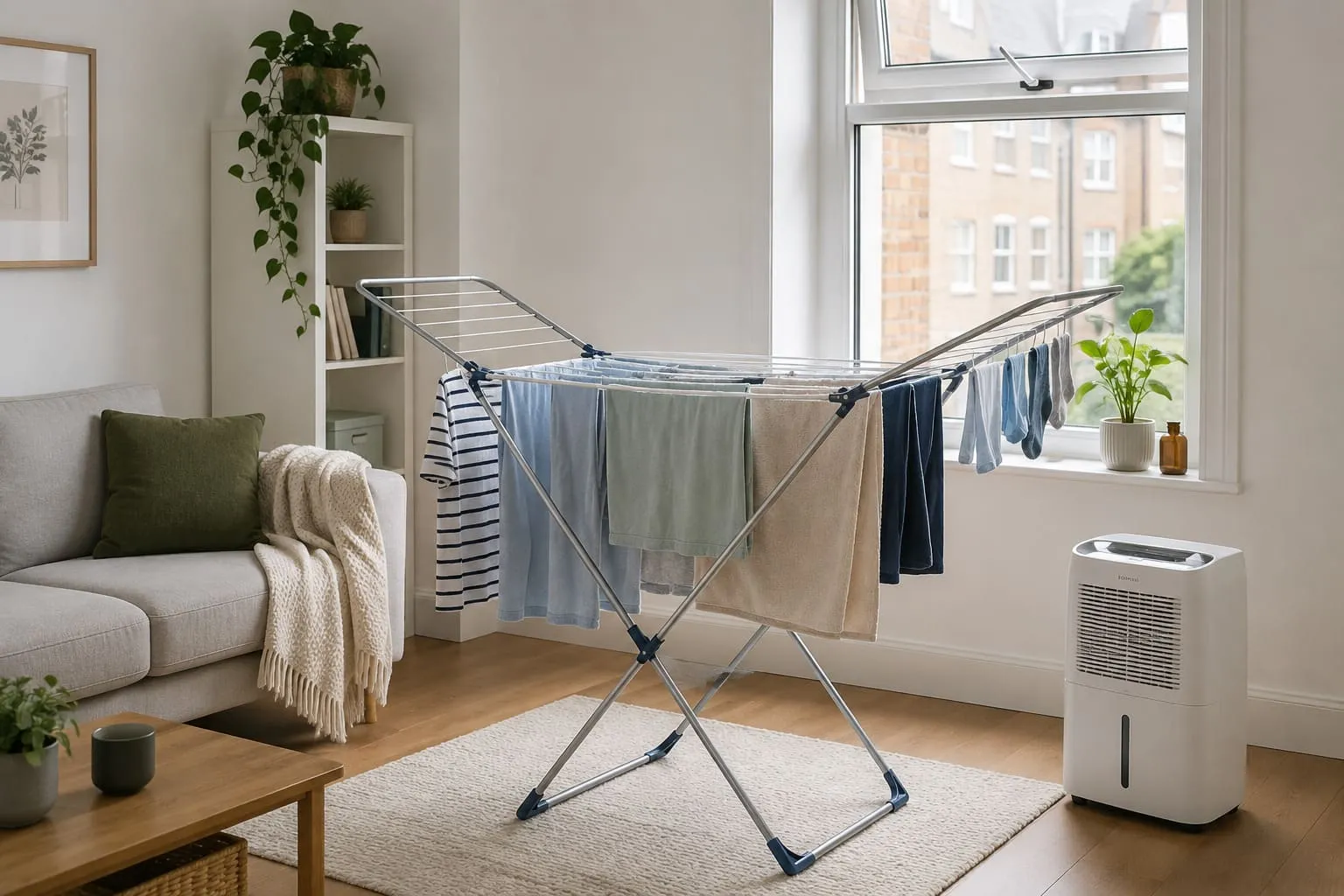
Yes. A normal folding airer plus a good dehumidifier is one of the most practical indoor drying setups. Give the clothes space, shut the room door, keep windows closed while the dehumidifier is operating and direct the appliance’s airflow towards the load without blocking its vents.
Should I open a window when using a dehumidifier to dry clothes?
Usually no. When you are deliberately dehumidifying one room, keeping the window and door closed lets the appliance work on a smaller, controlled volume of air. If you are using a heated airer without a dehumidifier, ventilation becomes more important because the released moisture still needs somewhere to go.
Can I run a heated airer and dehumidifier at the same time?
Yes, provided both are positioned and operated according to their manufacturers’ safety instructions. The combination can work well because the airer adds heat while the dehumidifier removes moisture and circulates drier air around the washing.
Which is quieter?
A heated rail airer is quieter because it has no fan or compressor. A dehumidifier produces background fan noise and compressor models add a low mechanical hum. If you dry clothes in a bedroom overnight, noise may be a meaningful factor in the buying decision.
Is a laundry-mode dehumidifier worth it?
It is useful if indoor laundry is one of your main reasons for buying a dehumidifier. Laundry modes typically run stronger airflow and moisture extraction for a set period, reducing the amount of adjustment needed during a drying session. It is still worth comparing power use, noise, tank size and extraction performance rather than buying on the mode name alone.