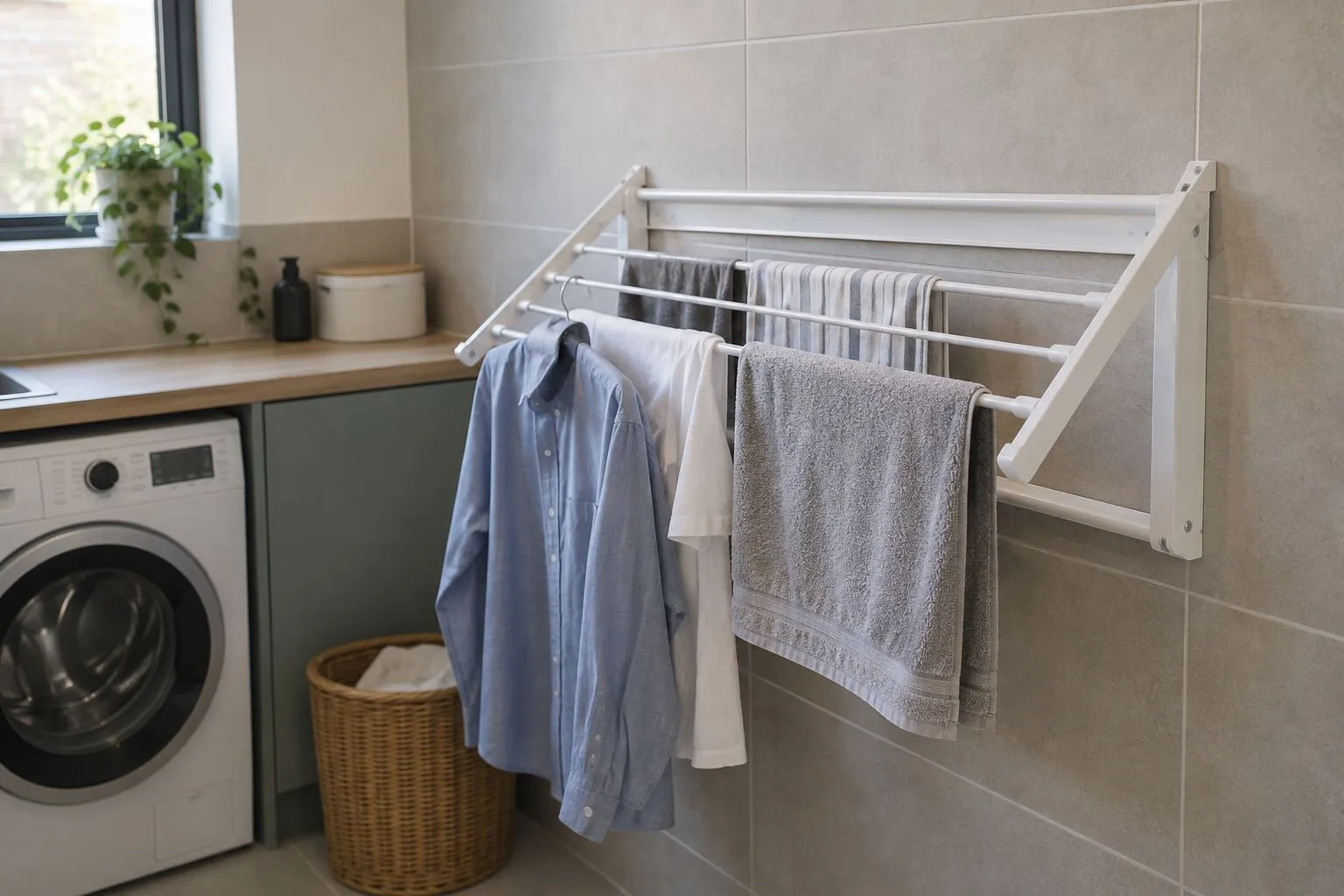
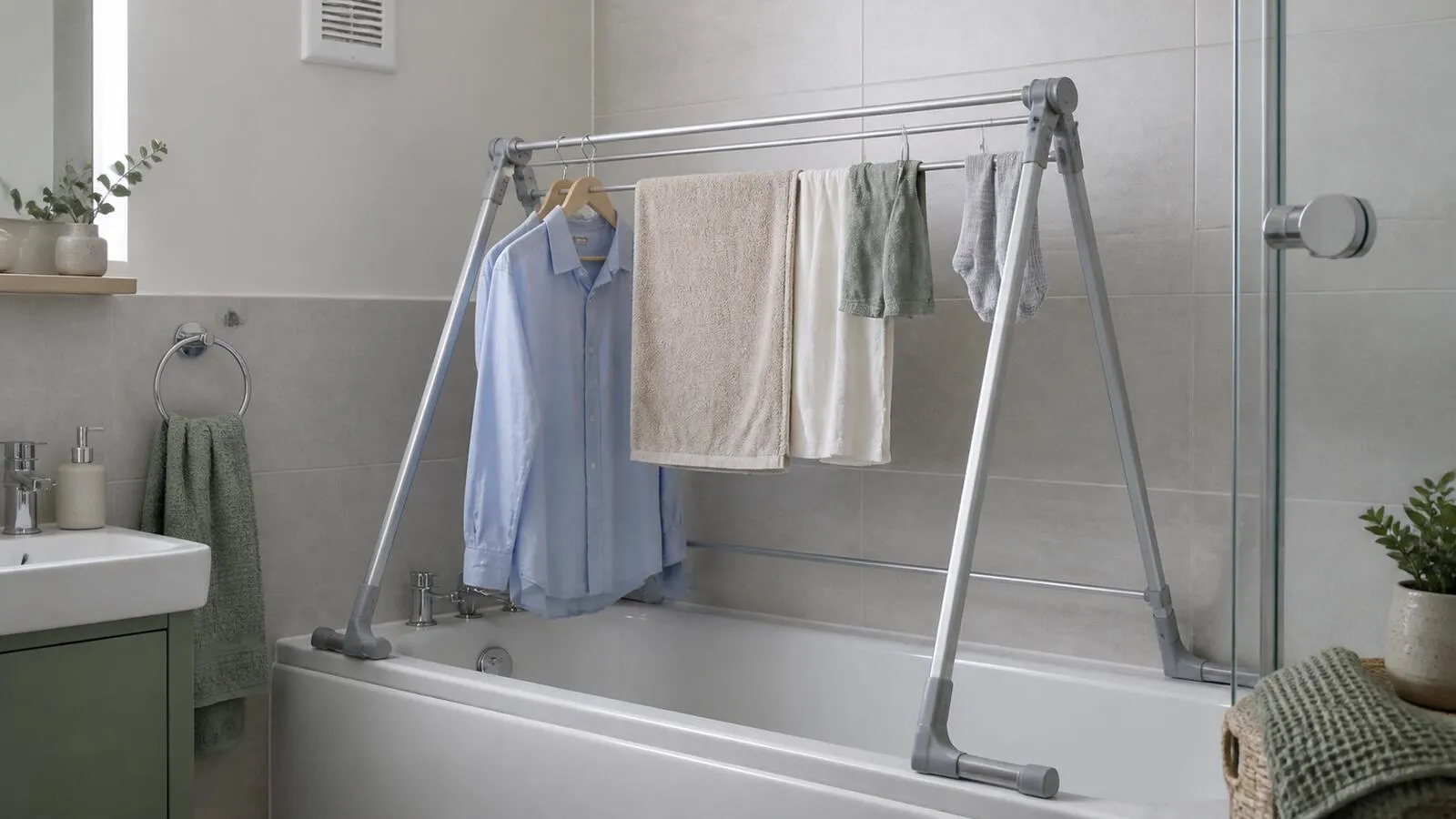
The Lakeland Dry:Soon Deluxe 3-Tier is one of the better-known heated airers in the UK, and after living with one our view is fairly simple: it works, but only if you have somewhere sensible to put it.
This is not a miniature tumble dryer and it does not make a wet load disappear in an hour. What it does well is keep steady warmth underneath and around a large amount of laundry so clothes spend less time hanging damp indoors.
For a small home, that distinction matters. The Dry:Soon Deluxe is compact when folded, but it is not particularly compact when you are actually using it.
There are no star scores here. A heated airer either earns its floor space or it does not.
What we used it for
We used the Dry:Soon Deluxe in a two-person household with no outdoor washing line, typically doing two or three loads a week.
Loads were the normal mixture of T-shirts, underwear, trousers, lightweight synthetics, cottons and the occasional towel. The airer generally stood in the living room overnight and was folded away again in the morning.
That is the use case where this type of heated airer makes the most sense: you already dry clothes indoors, but you want to shorten the period in which a large rack of damp washing occupies the room.
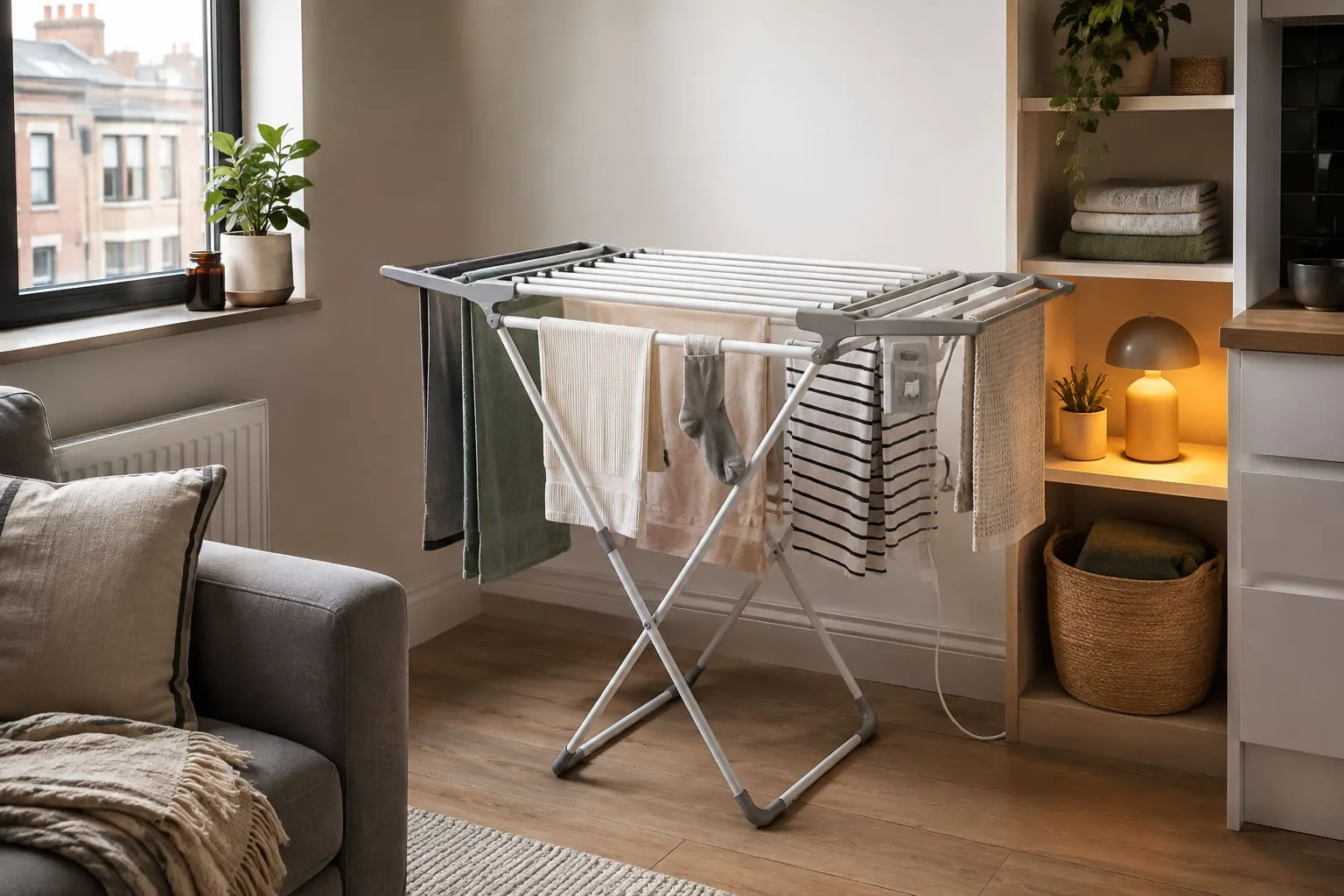
The Deluxe gives you 21m of drying space with a maximum stated load of 15kg. It uses 300W and includes a built-in timer.
Those numbers sound substantial, but the specification that matters most in a small flat is its physical size. Open, it measures roughly 70 x 74 x 132.5cm. Folded, it is only around 8cm deep.
In other words, storage is relatively easy. Finding space for it while a load is drying is the harder part.
Drying
Our experience with the Dry Soon Deluxe 3-Tier is that light clothing can often be dry enough to wear by the following morning when the airer is sensibly loaded and used with the cover.
That does not mean everything placed on it will dry overnight.
The heated rails provide gentle, localised warmth rather than blasting clothes with hot air. Garments touching or sitting close to the rails dry first, while thick sections, waistbands and areas where fabric overlaps can stay damp for longer.
Towels are a good example. A towel can feel dry around the edges while still holding moisture through a thicker folded section.
Loading technique therefore makes a surprisingly large difference.
If you squeeze as much washing as physically possible onto the 21m of rails, you restrict the air movement around individual garments. Clothes can then take considerably longer to finish.
We get better results by leaving some breathing room between larger items and treating the stated capacity as available hanging space rather than a target that must be filled every time.
It is also worth giving clothes a good spin in the washing machine first. The less water that reaches the airer, the less work your indoor drying setup has to do.
Does the cover make a difference?
For us, the cover is one of the accessories that makes the Dry:Soon concept work better.
The heated rails warm the laundry directly, while the cover helps hold that warmth around the clothes rather than immediately losing it into the room. The Deluxe cover has mesh ventilation panels, so it is not supposed to create a completely sealed hot box.
The difference is most noticeable when the room itself is cool.
Without a cover, the airer still works, but more of the benefit feels concentrated around the sections of clothing actually touching the heated rails.
With the cover fitted, drying feels more even.
What the cover does not do is remove moisture from your home. Water leaving the clothes still has to go somewhere.
That is particularly important in a small flat.
Living with it
This is the biggest compromise in our Lakeland Dry Soon review.
Folded away, the Deluxe is impressively easy to store for something capable of holding a substantial amount of washing. At around 8cm deep when folded, it can potentially live behind a door, beside a wardrobe or in a narrow cupboard.
Open it and the story changes.
A footprint of roughly 70 x 74cm is not huge in a utility room. It can feel very different in the only living room of a small flat.
Once you add hanging clothes around the outside, you need a little more clearance as well. You cannot realistically push a fully loaded rack tight against furniture and expect good airflow.
If your living room is only around three metres across, the Dry:Soon can become one of the largest objects in the room for the evening.
We do not consider that a defect. It is simply the unavoidable trade-off of a high-capacity three-tier airer.
This is why we would not automatically call the Deluxe the best heated airer for every small flat. A smaller airer that takes longer to dry your laundry can still be the better product if it fits your home more easily.
The three-tier design
The advantage of the Deluxe layout is that it uses height rather than spreading a traditional airer across a wide area of floor.
The tiers can also be configured around different types of clothing. You do not always need every shelf fully extended, which is useful when drying longer garments.
Access is reasonably straightforward because of the open-front design, although once the rack is heavily loaded you still need to think about where each item is going.
Small garments are the easiest place to waste rail space. Socks and underwear can occupy sections that would otherwise take larger pieces of clothing.
Accessories such as peg hangers can help with that, but we would not rush to buy every Dry:Soon accessory immediately.
Use the main airer first. If it becomes part of your weekly routine, you will quickly learn which accessories would genuinely solve a problem for you.
Moisture and condensation
A heated airer dries clothes by helping water evaporate. It does not make that water disappear.
In a small UK home during winter, this can be more important than drying speed.
If you take a wet load of washing and dry it indoors, a considerable amount of that moisture eventually enters the surrounding air. Heating the rails simply helps that process happen faster.
So closing every window, shutting the room and running a heated airer overnight can still leave you with condensation on cold windows.
The cover does not change the basic physics.
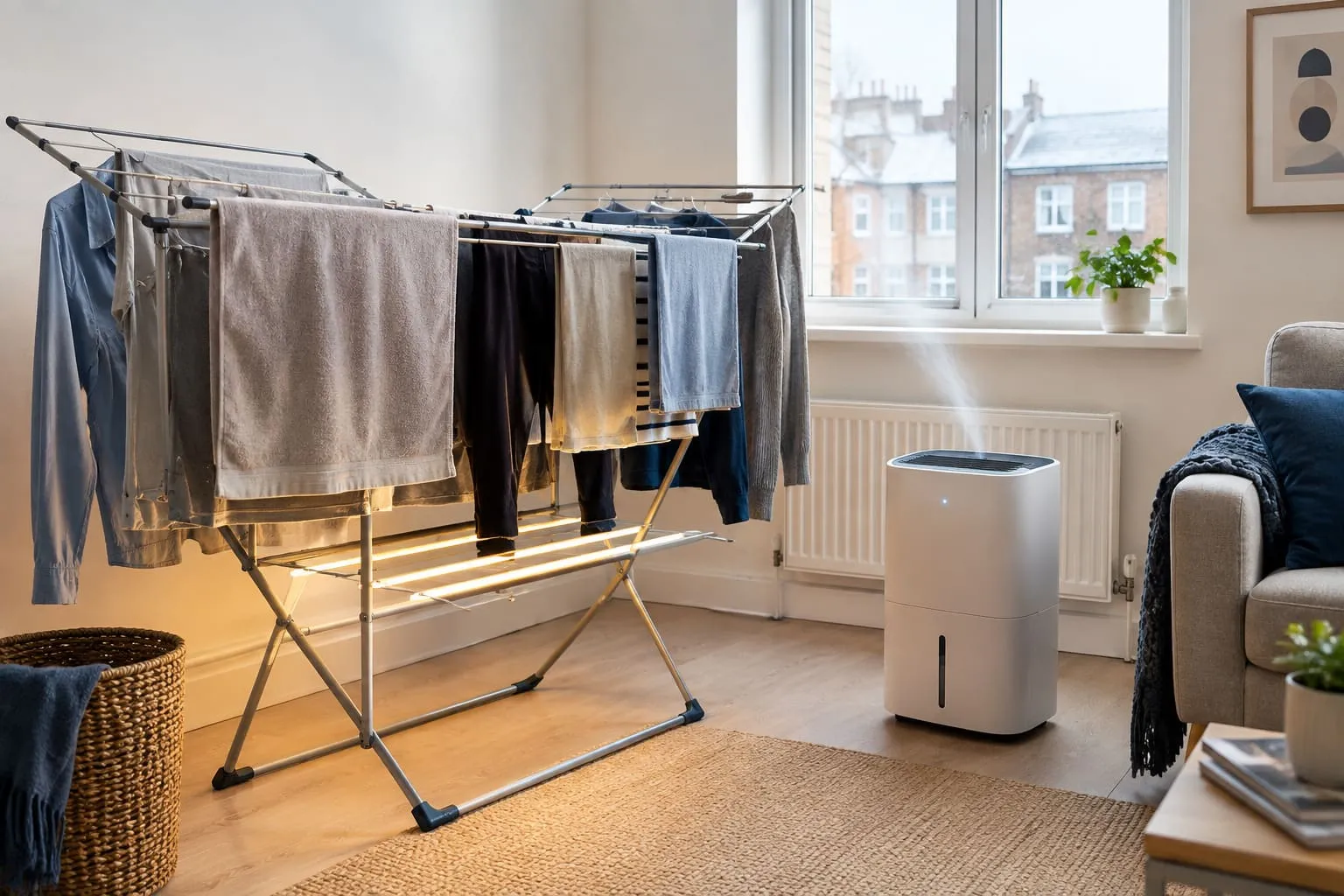
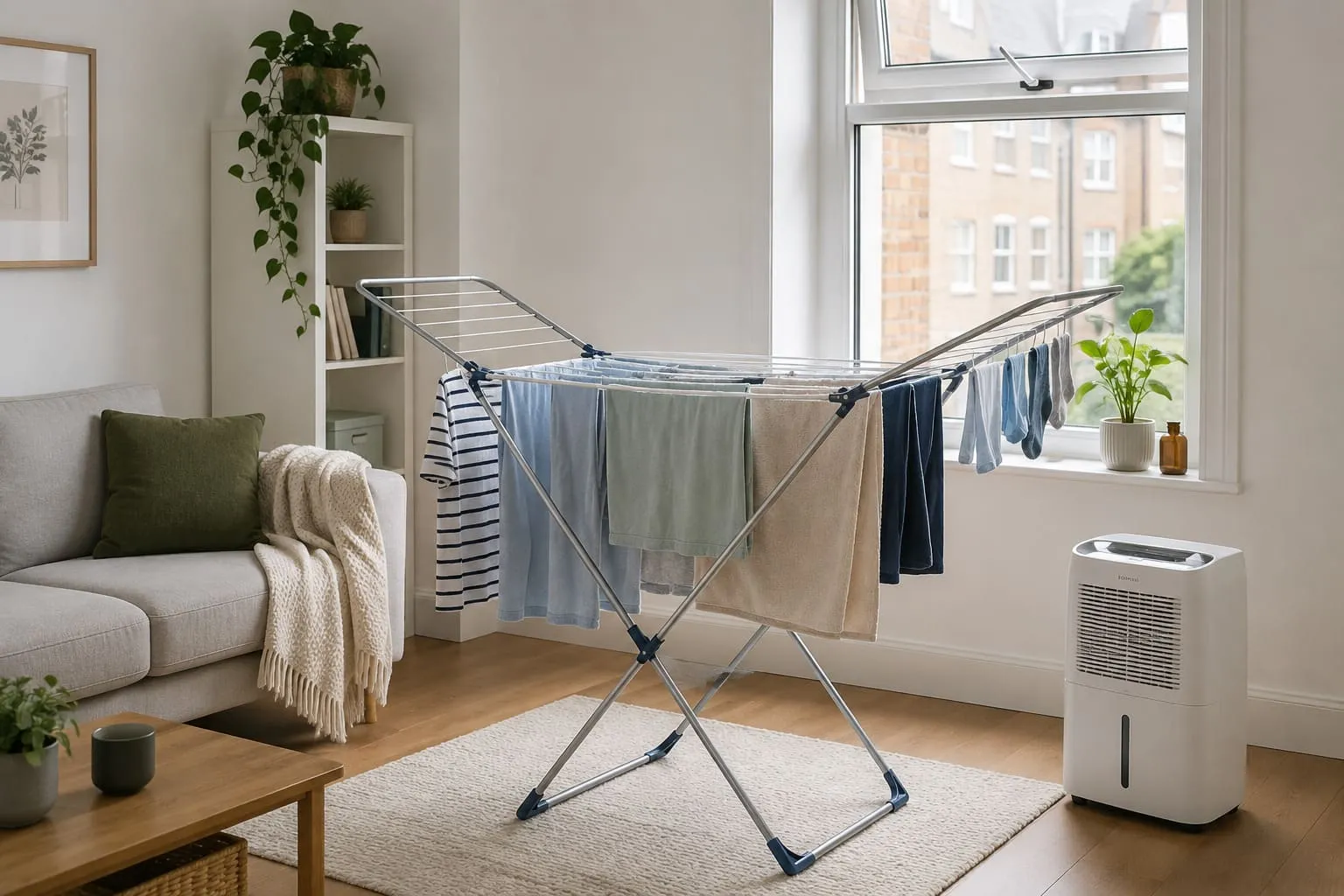
Our preferred setup is to give the moisture somewhere to go. That might mean some ventilation or, if indoor humidity is already a recurring problem, running a dehumidifier alongside the airer.
A dehumidifier and heated airer are not really competing appliances. One helps move moisture out of the clothes; the other removes moisture from the air.
If condensation is already one of your main problems, see heated airer vs dehumidifier before deciding which appliance to buy first.
Running costs
The Dry:Soon Deluxe is rated at 300W.
That relatively low power draw is part of its appeal compared with using a tumble dryer, but comparing the two purely by hourly electricity consumption can be misleading.
A tumble dryer uses much more power while operating but may finish a load relatively quickly. A heated airer consumes less power but may remain switched on for many hours.
The useful comparison is therefore not simply watts versus watts. It is whether the Dry:Soon gives you a practical way to dry clothes indoors without needing a tumble dryer at all.
For our use, that is where it earns its keep.
The built-in timer is also genuinely useful because an airer like this is often used for long evening or overnight drying sessions. You can choose how long you want the heat running rather than leaving it switched on indefinitely.
What we like
The strongest part of the Dry:Soon Deluxe is the combination of capacity and storage.
You get enough drying space for a substantial load, yet the frame becomes remarkably slim once folded. That makes more sense for small homes than an appliance that permanently occupies the same floor area.
The gentle heat also suits the kind of clothes we would normally hang dry anyway.
Most importantly, it makes indoor drying more predictable. Instead of putting a load on a cold airer and wondering whether it will still be damp the following evening, we have a much better chance of getting lighter items finished overnight.
What we would change
There is no escaping the size when the Deluxe is open.
If you live in a studio or a particularly narrow flat, measure the space where you intend to use it rather than the cupboard where you intend to store it.
We would also like people buying heated airers to have more realistic expectations about drying speed.
The rails are warm, not scorching. Thick clothing does not magically become dry because it has touched a heated bar for a few hours.
You still need airflow, sensible spacing and time.
And if you already have a damp or condensation problem, the Dry:Soon can make that moisture move into the room faster. It should be part of an indoor drying strategy rather than treated as a solution to humidity.
Who should buy it
Buy the Lakeland Dry:Soon Deluxe 3-Tier if you regularly dry full loads indoors, do not have a tumble dryer and have enough temporary floor space to leave the airer open for several hours.
It is particularly good for households where a normal airer already lives in the lounge every winter. In that situation, you are not introducing a completely new inconvenience. You are upgrading an existing one so the washing gets out of the room sooner.
It also makes sense if storage is tight but you have usable floor space while drying. The ability to fold to around 8cm deep is one of the Deluxe model’s most useful small-home features.
Who should skip it
Skip it if you want tumble-dryer convenience. This is still an airer, and drying remains a several-hour process.
We would also think twice if your only available drying area is extremely small. The Deluxe might fit according to the tape measure while still making the room unpleasant to use once covered in washing.
And if your biggest winter problem is already condensation, mould risk or persistently high humidity, we would consider dealing with moisture first.
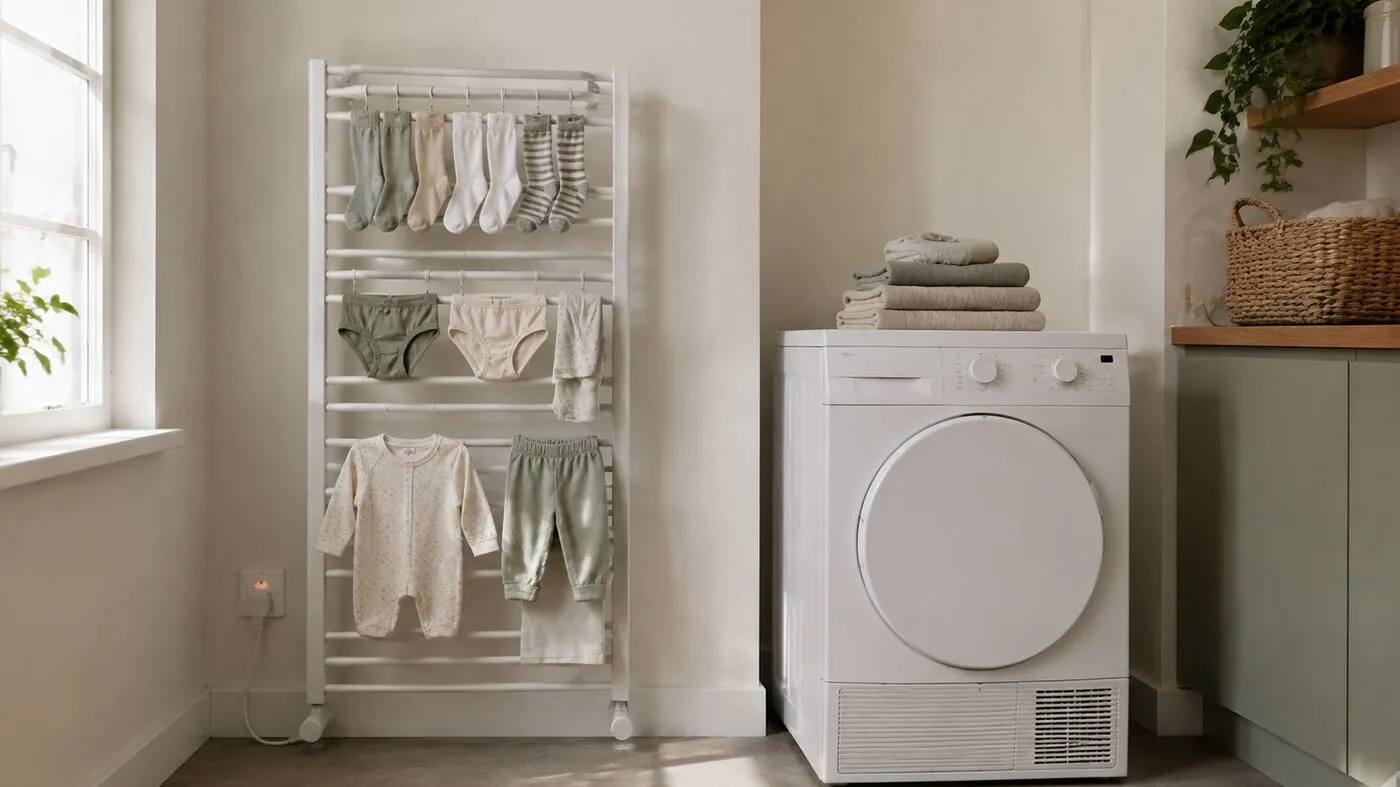
A smaller heated airer or a dehumidifier may make more sense depending on the problem you are actually trying to solve.
Verdict
The Dry:Soon Deluxe is easy to understand once you stop thinking of it as a cheap substitute for a tumble dryer.
It is a better version of the indoor clothes airer many UK households already rely on.
For us, the benefit is not dramatic heat or exceptionally fast drying. It is being able to put washing out in the evening and have much of a sensibly loaded batch ready by the following morning instead of having damp clothes hanging around for another day.
The main downside is equally straightforward: it occupies a meaningful chunk of floor space while doing its job.
If you can park it somewhere without resenting it, the Lakeland Dry:Soon Deluxe 3-Tier is a very practical indoor drying setup. If every square metre of your home already has a job, look at the smaller options in our best heated airers for small flats before choosing the Deluxe.