You do not need a tumble dryer to get washing dry in a flat. What you need is a plan for the water.
Start by removing as much water as possible in the washing machine, spread the load across an airer rather than bunching it together, and dry it in one room where you can control the airflow and humidity.
The mistake is thinking indoor drying is mainly about heat. Heat helps, but moisture still needs somewhere to go.
The quickest way to dry clothes in a flat
For most UK flats, use this order:
- Run the highest spin speed that is suitable for the fabric
- Add an extra spin for particularly wet loads such as towels
- Shake each item out before hanging it
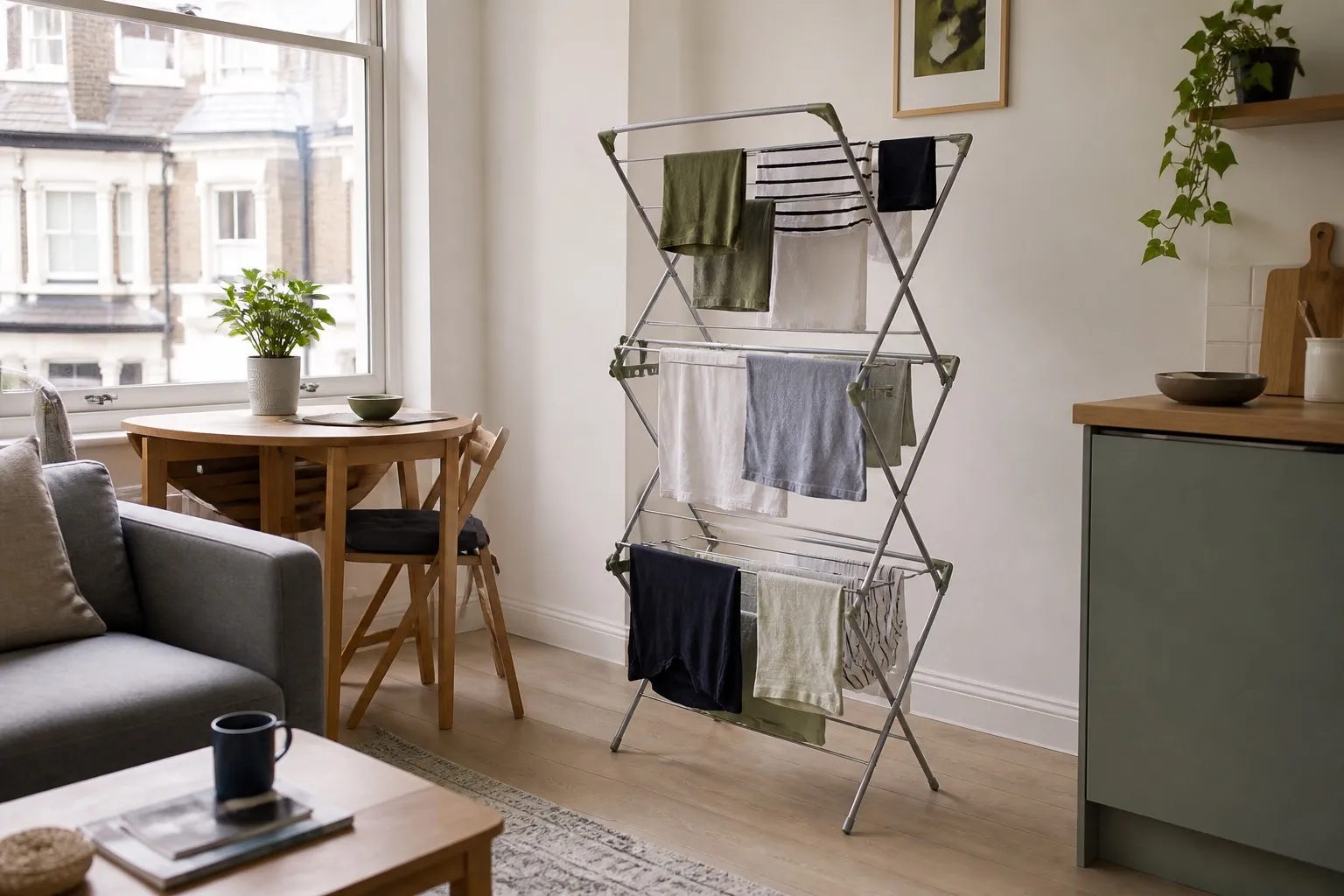
- Spread everything across an airer with gaps between items
- Put the airer in one reasonably warm room
- Ventilate the room or run a dehumidifier
- Turn or reposition thick items if one side remains damp
That basic routine matters more than buying a complicated drying system.
Spin the load properly first
Every bit of water removed inside the washing machine is water you do not have to evaporate into your flat.
Use a high spin speed for fabrics that can tolerate it. Towels, bedding and cotton clothing can often benefit from an additional spin cycle if they still feel heavy when the wash finishes.
Delicates are different. Follow the garment care label rather than automatically putting every load through the fastest spin available.
Once the cycle finishes, take the washing out promptly and give each item a shake. Sleeves stuck together, folded waistbands and crumpled T-shirts all create damp areas that take longer to dry.
Dry everything in one room
Do not turn the whole flat into a washing line.
A single drying area is much easier to manage than socks on the bathroom radiator, shirts over dining chairs and towels hanging from doors.
Choose a room where you can control ventilation. A spare bedroom, utility area or bathroom can work depending on the flat.
If you are using a dehumidifier, a smaller room is particularly useful because you can close the door and let the machine work on that space rather than trying to remove moisture from the entire flat.
UK housing guidance similarly recommends containing indoor washing and providing ventilation rather than allowing the moisture to spread throughout the home.
Give every item some air
The limiting factor with many clothes airers is not the number of rails. It is airflow.
If two damp T-shirts are pressed against each other, the touching surfaces stay wet. The same problem occurs when a towel is folded over several bars with multiple layers sitting together.
Leave gaps where possible.
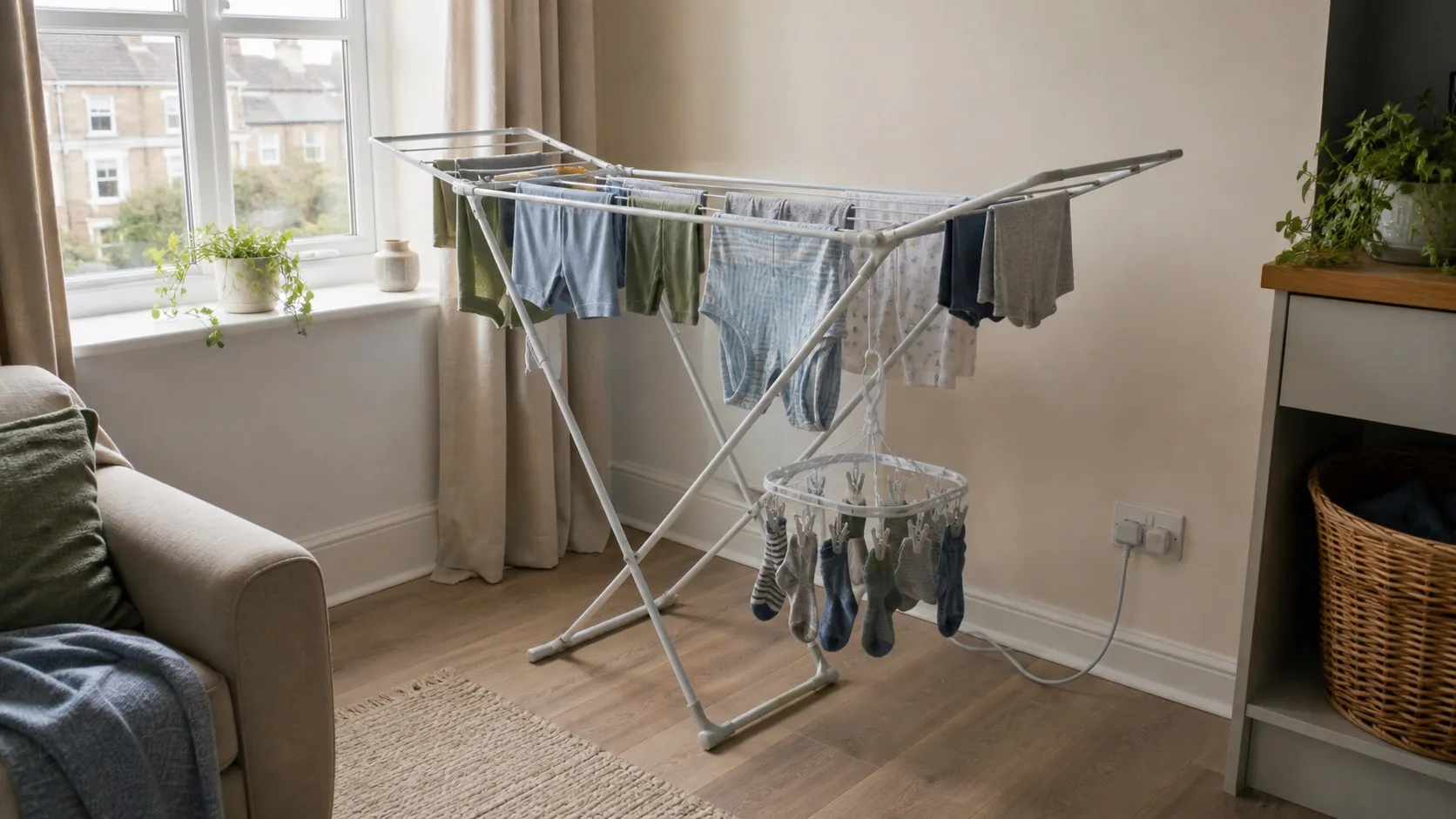
Hang shirts from hangers if your airer or room allows it. Spread trousers rather than folding them into a thick bundle. Give towels more space than thin synthetic clothing.
If one washing load completely overwhelms your airer, splitting it into two drying sessions may work better than forcing every item onto the frame.
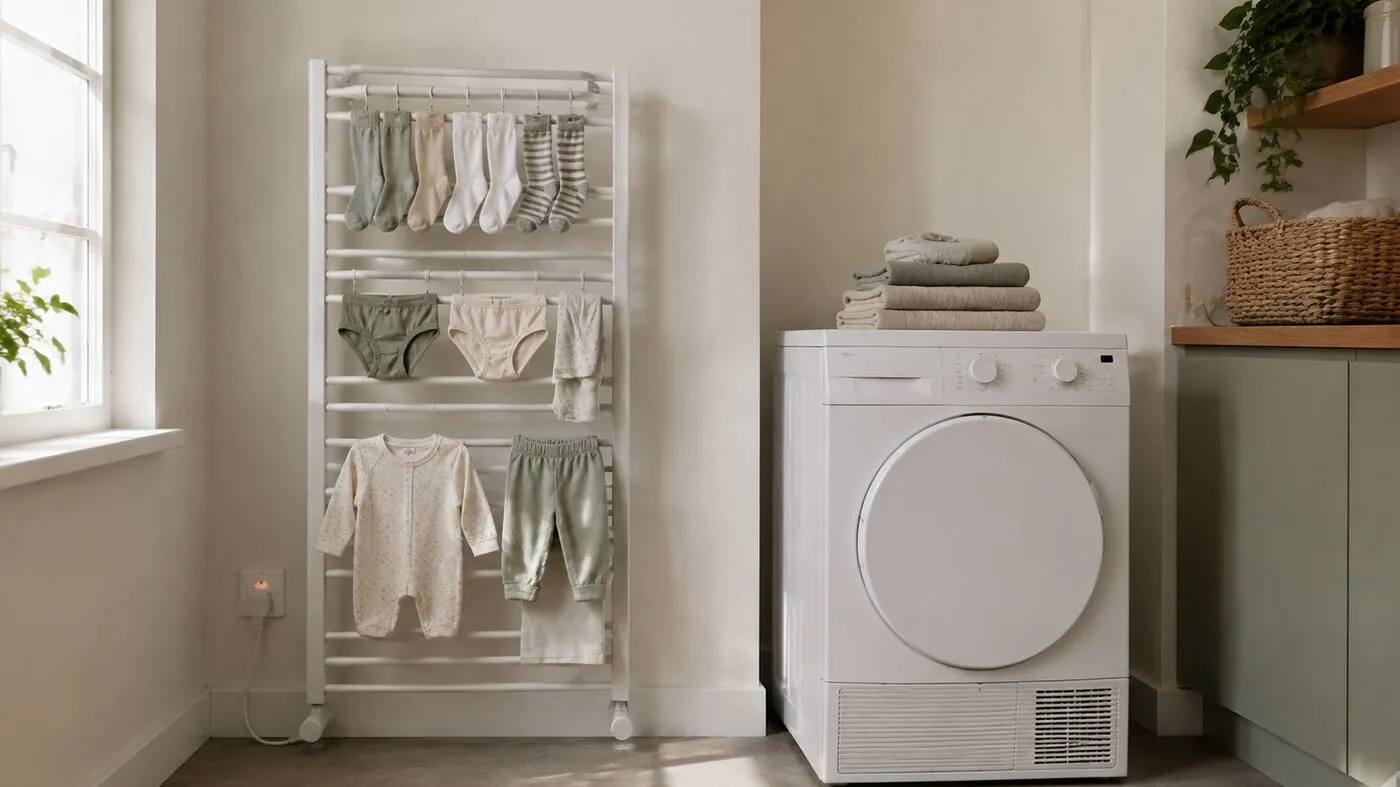
A basic folding airer is enough for many flats. If winter loads regularly remain damp for most of the day, our heated airer buying guide covers more compact powered options.
Heat helps, but still air does not
A warmer room generally helps water evaporate from fabric.
But warming a sealed room without dealing with the moisture eventually gives you warm, humid air. You may then see condensation appearing on cold windows and external walls.
Indoor drying itself can contribute to condensation if the room is not adequately ventilated, which is why Energy Saving Trust advises keeping rooms ventilated when drying clothes on a rack indoors.
Depending on the flat, you have three useful ways to deal with the moisture:
- open a window slightly when conditions and security allow
- use an existing extractor fan
- run a dehumidifier
You do not necessarily need all three.
Should you open the window or use a dehumidifier?
Think of these as two different drying strategies.
If you are using ventilation
Put the airer in a room where you can safely open a window or use an extractor fan.
Keep internal doors reasonably contained so that the moisture is encouraged out of the flat rather than simply travelling into bedrooms and hallways.
This works particularly well when the outdoor air is reasonably dry and the flat already has decent ventilation.
If you are using a dehumidifier
Close the windows and usually close the room door.
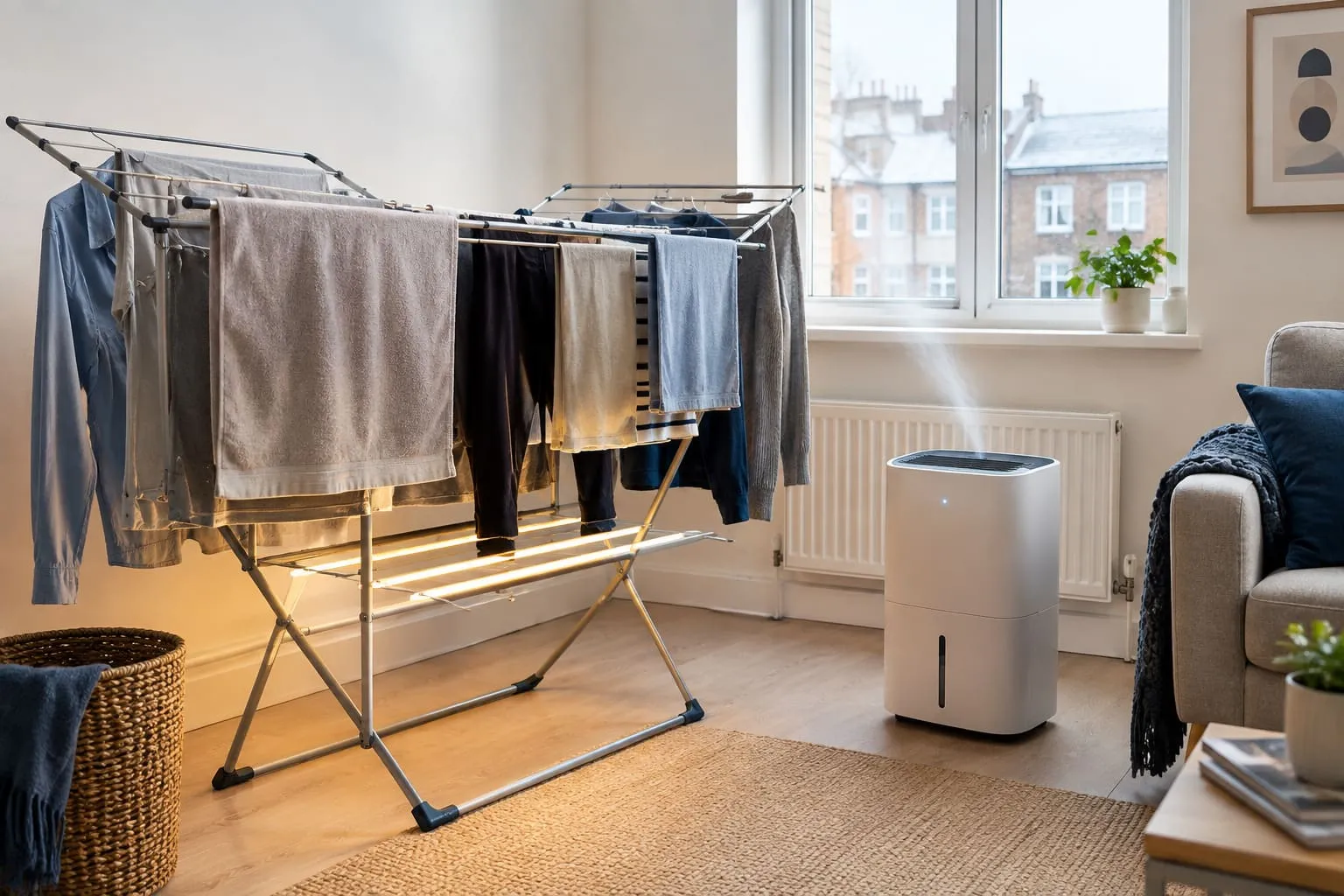
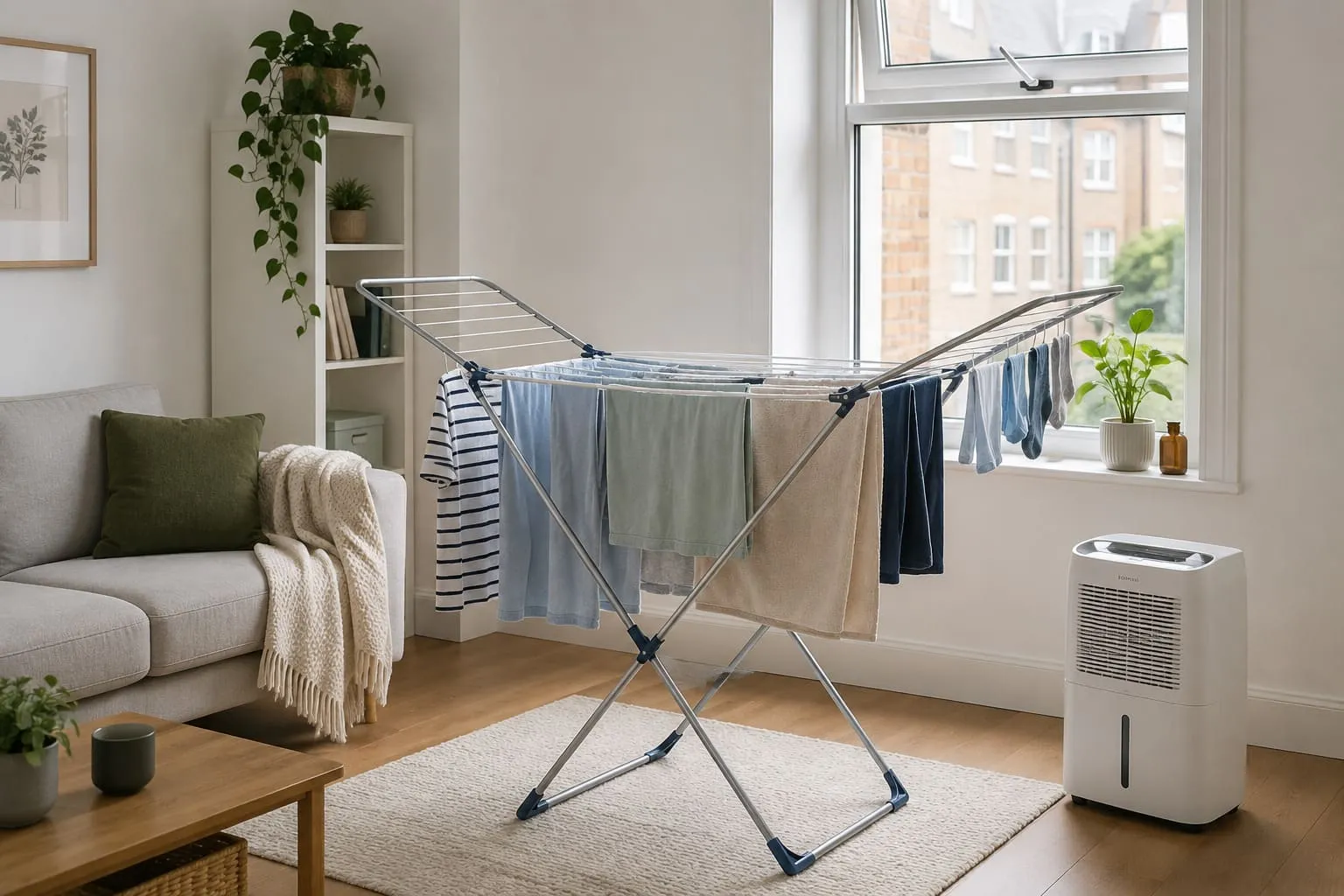
Put the airer and dehumidifier in the same room and let the machine remove moisture from the air as the clothes release it.
Opening a window at the same time makes little sense because the dehumidifier then has to deal with a continuing supply of outside air.
A dehumidifier becomes especially useful if drying washing indoors regularly produces wet windows or the flat already struggles with condensation. Energy Saving Trust specifically identifies helping with indoor washing as one reason to consider one.
See our best dehumidifiers for drying clothes if this is becoming part of your normal winter routine.
Is a heated airer worth it?
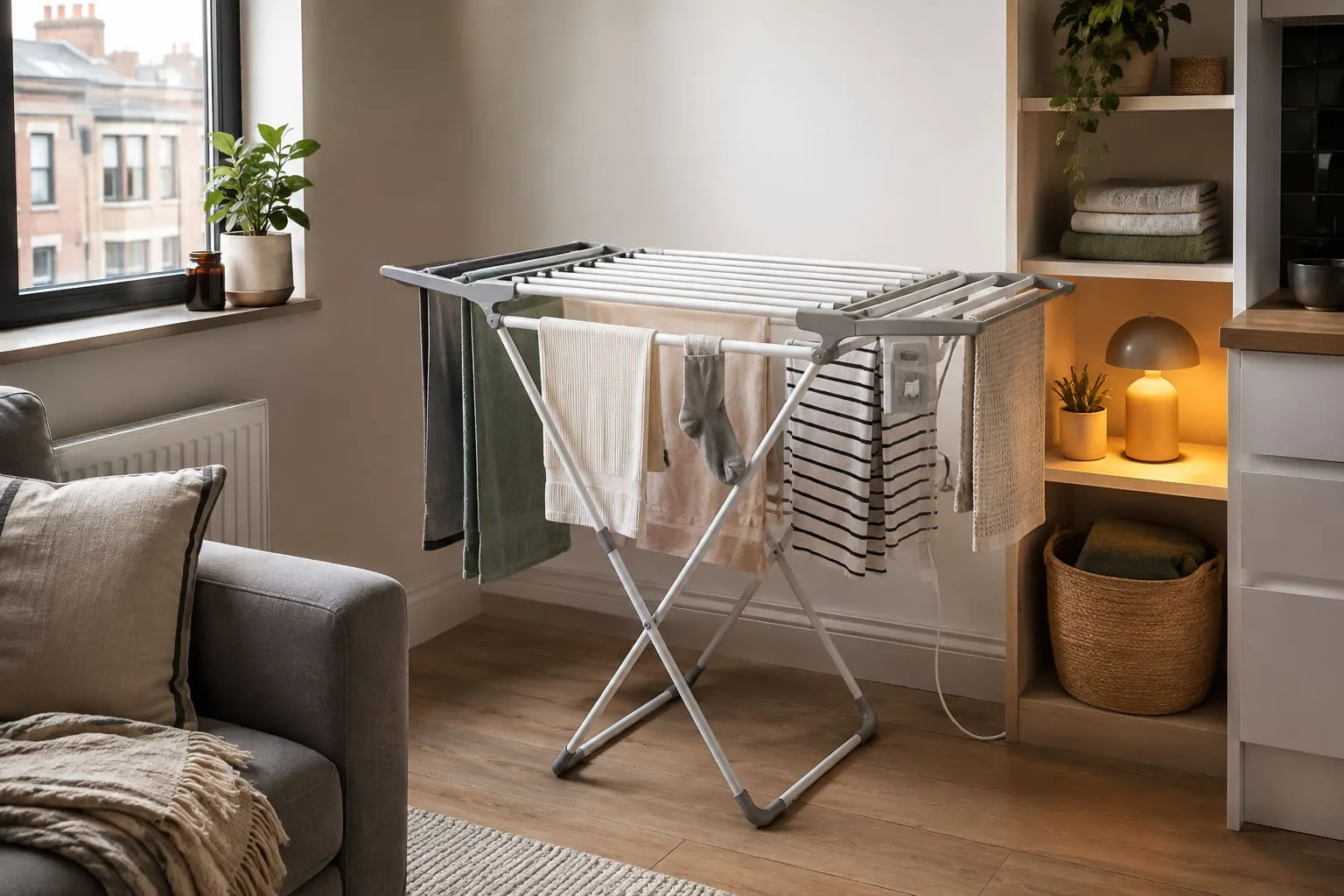
A heated airer adds gentle heat close to the washing rather than relying entirely on the temperature of the room.
That can be useful in a small flat where an ordinary airer becomes painfully slow during winter.
It does not, however, make the moisture disappear.
A heated airer used in a sealed room can still leave you with humid air and condensation. Pair it with ventilation or a dehumidifier rather than treating heat as the whole solution.
If floor space is tight, pay particular attention to folded dimensions as well as drying capacity. An enormous three-tier airer is not compact if you have nowhere to store it for the other six days of the week.
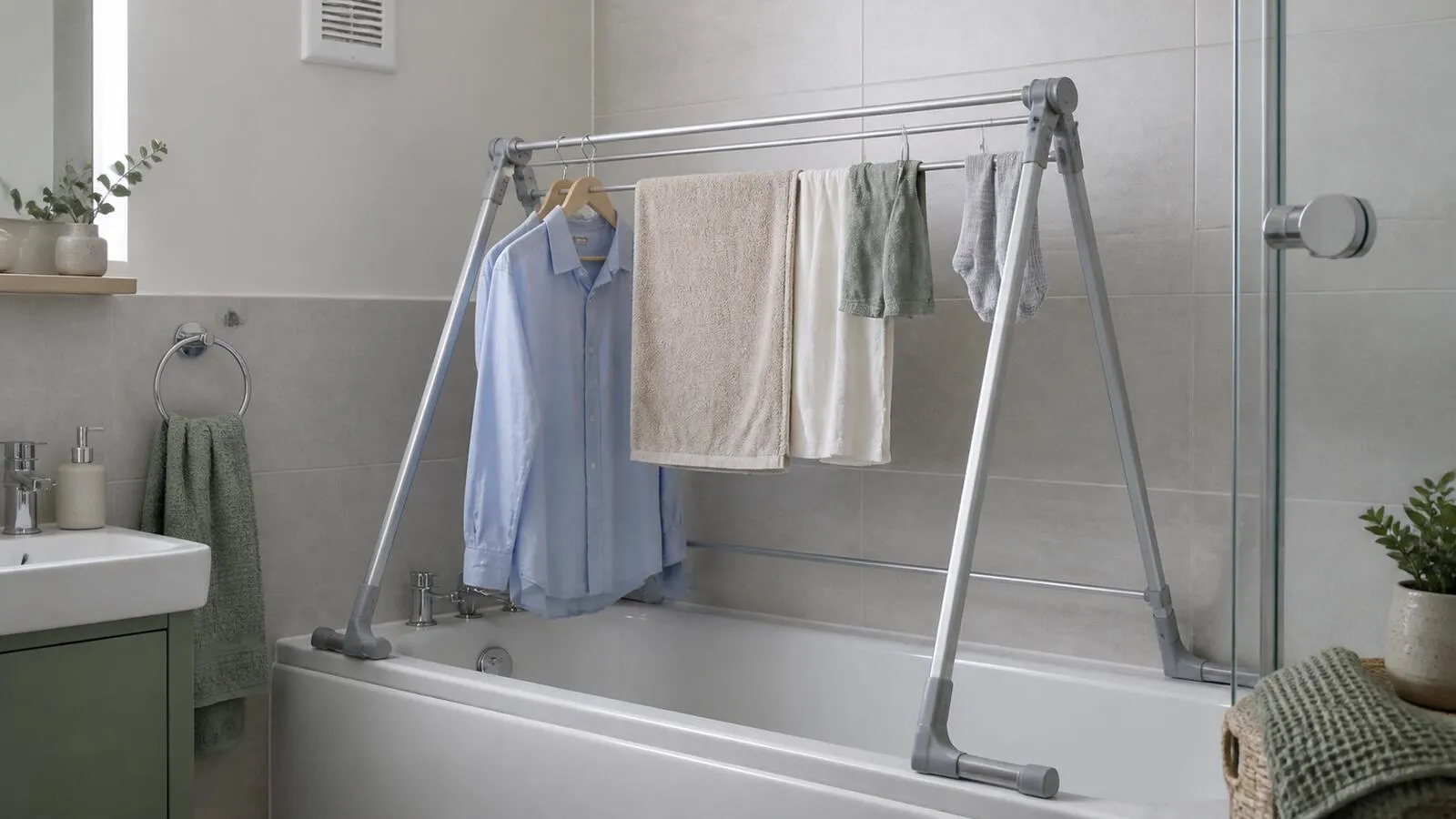
Is the bathroom the best room for drying clothes?
Sometimes.
A bathroom has one major advantage: it should already have a way of extracting moist air.
Put the airer inside, close the door and run the extractor fan or open the window where appropriate. Several UK councils specifically recommend this approach when washing has to be dried indoors.
The downside is timing.
If three people have just showered, the bathroom is already carrying plenty of moisture. Adding a full washing load immediately afterwards gives the room even more water to deal with.
If possible, let the shower moisture clear first.
Avoid drying everything on radiators
A radiator will certainly warm wet clothing, but covering radiators with washing is not a great whole-flat drying strategy.
It concentrates moisture around the room, reduces the amount of useful heat reaching the rest of the space and gives you very little drying area.
Multiple UK local-authority damp and condensation guides advise against drying washing directly on radiators.
An airer beside — rather than covering — a heat source gives the clothes far more exposed surface area.
How to dry clothes indoors in winter
Winter is where the system matters most.
Opening every window wide for hours can make the flat uncomfortable, while closing everything tightly can leave you with condensation.
Instead, choose one drying room and control it deliberately.
If using natural ventilation, combine reasonable warmth with an extractor, trickle vent or partially opened window.
If that is consistently too slow, a dehumidifier is often the missing part of the setup because it removes moisture without requiring you to leave a window open throughout a cold evening.
If you are already wiping water from the windows every morning, solve the moisture problem as well as the laundry problem. Start with how to stop condensation in a UK flat.
Why are my clothes taking so long to dry?
Usually it is one of five things:
The washing came out too wet
Use an additional suitable spin before putting it on the airer.
The airer is overloaded
If fabric is touching everywhere, separate the load.
The room is cold and humid
Ventilate it or use a dehumidifier rather than simply waiting longer.
Thick items are folded over themselves
Give towels, jeans and hoodies more rail space and reposition them partway through drying.
You are drying washing all over the flat
Concentrate it in one controlled drying area instead.
A small-flat drying routine that actually works
You do not need to redesign your home around washing day.
Wash → spin → shake → airer → airflow → fold away.
That is the system.
Use a normal folding airer if it gets the job done. Add a heated airer if cold-weather drying is consistently slow. Add a dehumidifier if moisture and condensation are the bigger problem.
The best setup is not the one with the most equipment. It is the one that gets the clothes dry without making the flat damp — and disappears again when the washing is finished.