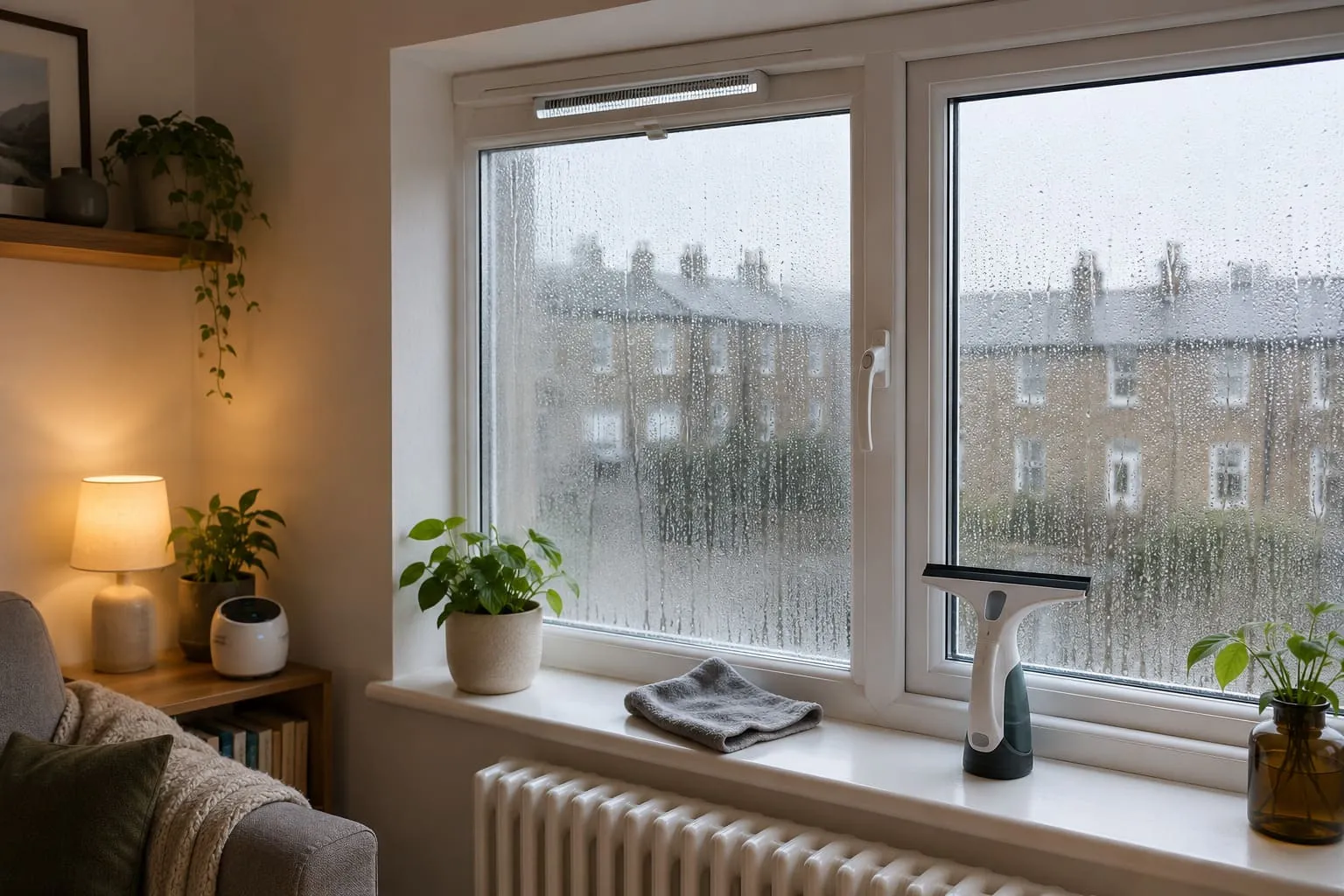
Condensation on windows is one of the most common winter problems in UK flats. Warm, moisture-filled indoor air reaches a cold surface — usually glazing, window frames or an external wall — cools down and leaves water behind.
A little condensation after a shower is normal. Windows streaming with water every morning, damp sealant and recurring black mould are signs that moisture is accumulating faster than the flat can get rid of it.
The solution is usually a combination of producing less moisture, ventilating at the right times and dealing with the water that still forms.
Why does condensation happen in flats?
Small flats can build humidity surprisingly quickly.
Everyday activities add moisture to the air:
- showering and bathing
- boiling pans and using the kettle
- drying clothes indoors
- breathing while you sleep
- running an unvented tumble dryer
- hanging wet coats and towels indoors
The problem becomes more noticeable in winter because windows and external walls are colder.
Single glazing, older double glazing, poorly insulated reveals and other cold bridges can therefore become the first places where moisture condenses.
That is why one bedroom window might be soaked while another room remains relatively dry.
1. Cut the moisture you add
Start with the sources you can control.
Use the extractor fan whenever you cook or shower, and leave it running afterwards rather than switching it off the moment you finish.
Put lids on pans when practical. It reduces the amount of steam entering the room and has the useful side effect of helping food heat more efficiently.
Keep the bathroom door closed while showering so moisture is extracted there rather than spreading into bedrooms and hallways.
Laundry is another major source.
A load of wet washing contains a substantial amount of water, and if you dry it indoors that water has to go somewhere.
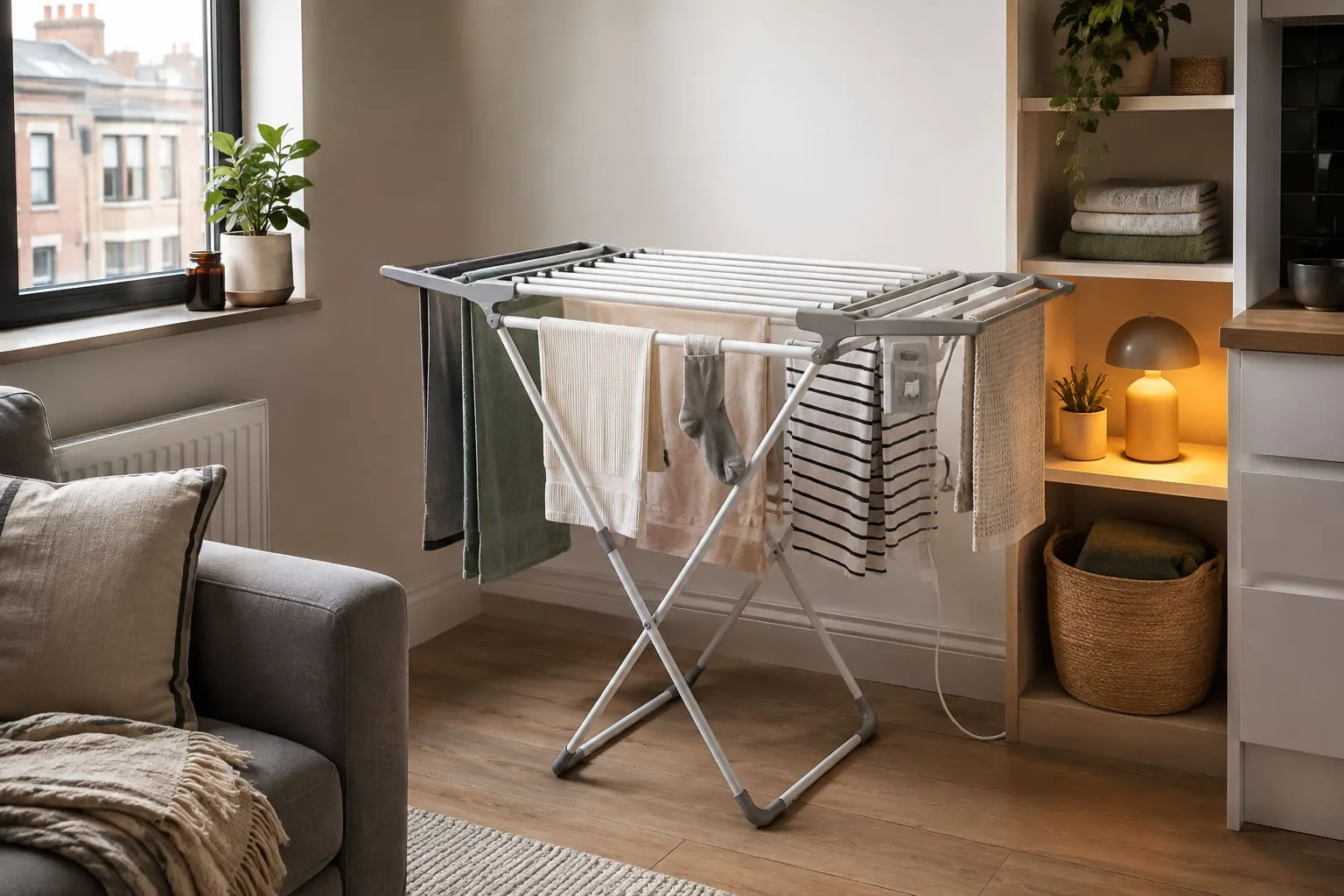
Rather than spreading clothes across radiators throughout the flat, use one deliberate drying setup with an airer, ventilation or dehumidifier.
Our guide to drying clothes in a flat without a tumble dryer covers this in more detail.
2. Use ventilation strategically
Opening windows can help, but you do not need to leave the flat freezing all day.
In winter, short periods of purposeful ventilation are generally more useful than leaving one window slightly open for hours while the heating tries to compensate.
After a shower or particularly steamy cooking session, open a suitable window for a short period and let the extractor do its job.
If your windows have trickle vents, keep them open unless there is a specific reason not to.
They provide a small amount of background ventilation and can help moisture escape throughout the day.
Do not permanently block air bricks, extractor outlets or other designed ventilation routes simply because they introduce some cold air. Removing ventilation can make condensation worse.
3. Keep air moving around cold surfaces
Condensation often appears behind furniture because warm room air cannot reach the cold wall properly.
If a wardrobe, chest of drawers or sofa is pushed tightly against an external wall and you repeatedly find mould behind it, move the furniture slightly forward to create an air gap.
The same principle applies to curtains.
Heavy curtains pressed against a cold window can create a pocket of still, damp air overnight. Opening them in the morning allows warmer room air to reach the glass and helps the area dry.
Avoid packing window sills with objects if the glass behind them is regularly wet.
4. Wipe condensation before it becomes a mould problem
Sometimes you can improve ventilation considerably and still wake up to water on a cold bedroom window.
Remove it.
A microfibre cloth, absorbent towel or window vacuum can make this a quick part of the morning routine.
Pay particular attention to:
- the bottom of the glazing
- rubber seals
- silicone around the frame
- painted timber
- the window sill
Wiping the window does not solve the underlying cause of condensation, but it prevents water from sitting against paint, sealant and plaster for hours.
That matters.
Repeated wetting creates much better conditions for mould and can eventually damage decorative finishes and timber frames.
5. Check your indoor humidity
A small hygrometer can help you understand whether the problem is a brief burst of moisture or consistently humid indoor air.
Humidity naturally changes throughout the day. It might jump after showering, cooking or hanging washing and then fall once ventilation catches up.
The more useful pattern to look for is humidity that remains high for long periods, particularly overnight.
If the flat stays humid even when you are ventilating normally, you may need to remove moisture mechanically.
6. Use a dehumidifier when humidity stays high
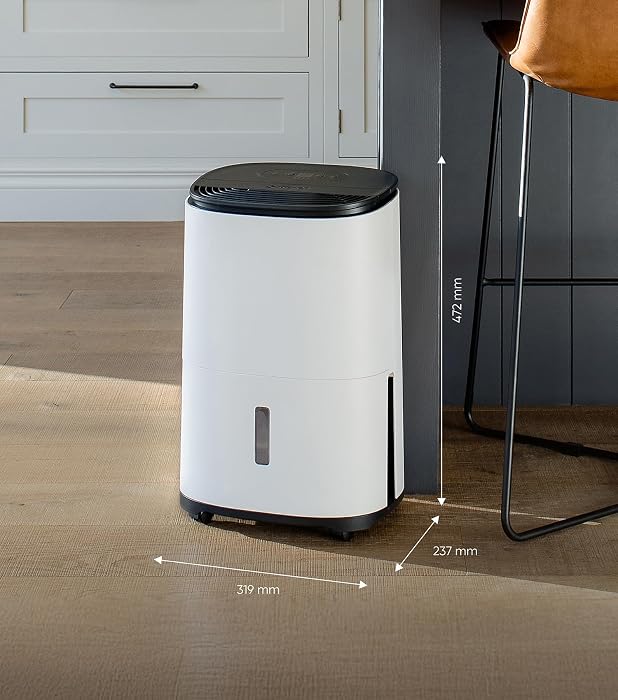
A dehumidifier can be very effective in a small flat, particularly if you regularly dry washing indoors.
It removes water from the air rather than relying entirely on outside ventilation.
That makes it useful for:
- drying laundry
- humid bedrooms
- flats where opening windows is impractical overnight
- persistent winter condensation
- rooms with limited ventilation
If laundry is the main reason your humidity climbs, start with our guide to the best dehumidifiers for drying clothes.
A dehumidifier is not a substitute for ventilation, however.
If the bathroom extractor is broken, the trickle vents are sealed shut or water is entering around a damaged window frame, deal with that problem as well.
7. Heat the flat consistently where possible
Cold surfaces make condensation more likely.
You do not necessarily need to turn the heating up dramatically, but allowing a room to become extremely cold and then filling it with warm, humid air can make condensation worse.
A reasonably consistent background temperature helps keep internal surfaces warmer.
This is particularly relevant to spare bedrooms and rooms that are rarely heated but still receive moisture from the rest of the flat.
You should not have to overheat a property simply to keep it dry. If ordinary heating and ventilation cannot prevent severe condensation, the building itself may need attention.
What about condensation on bedroom windows?
Bedrooms are especially prone to morning condensation because people release moisture simply by breathing.
Close the bedroom door and sleep for eight hours with two people in a small room, and humidity can rise significantly overnight.
Try to:
- keep trickle vents open
- avoid drying laundry in the bedroom
- open curtains promptly in the morning
- ventilate briefly after waking
- wipe persistent water from the glass and frame
If condensation remains severe, monitoring the room with a hygrometer can tell you whether overnight humidity is the main problem.
A dehumidifier may help, particularly in very small or poorly ventilated bedrooms.
What if mould has already appeared around the window?
Small patches of surface mould around regularly wet window sealant are often associated with repeated condensation.
Cleaning the visible mould is only half the job.
If the window continues getting wet every day, the mould is likely to return.
First improve moisture control and ventilation, then clean the affected surface using a product appropriate for the material.
Do not paint directly over active mould or repeatedly damp plaster and expect the problem to disappear.
If mould is extensive, keeps returning despite reasonable ventilation, or appears well beyond obvious condensation areas, investigate the underlying cause.
Condensation or a bigger damp problem?
Not every damp patch is condensation.
Condensation usually appears on cold internal surfaces and is closely connected to humidity inside the property.
Be more suspicious of another cause if you see:
- a localised damp patch that gets worse after rain
- staining around a ceiling or pipe
- wet skirting boards
- crumbling or persistently damp plaster
- water around a damaged window frame
- damp affecting one concentrated area regardless of indoor humidity
- tide marks or deposits appearing through a wall
Those symptoms can point towards a leak, water ingress or another building defect.
A simple condensation routine for winter
If your windows are wet most mornings, start with this rather than buying several products at once.
Morning: open curtains, wipe wet windows and ventilate briefly.
Cooking: use lids and run the kitchen extractor.
After showering: keep the bathroom door closed, run the extractor and ventilate if necessary.
Laundry: dry one load in one planned location rather than distributing wet clothes around the flat.
Evening: check that trickle vents and extractors are unobstructed.
If you still have consistently high humidity after doing those things, a dehumidifier becomes a much more sensible next step.
The bottom line
You usually stop condensation in a flat by controlling moisture, ventilation and cold surfaces together.
There is rarely one miracle product.
Reduce unnecessary steam, use the ventilation already built into the flat, dry laundry deliberately and remove water that collects on windows.
A dehumidifier can make a significant difference when the flat simply produces more moisture than passive ventilation can comfortably handle.
But if water is entering through the building fabric, frames are deteriorating or damp persists regardless of what you do indoors, the next step is fixing the property — not buying a bigger dehumidifier.