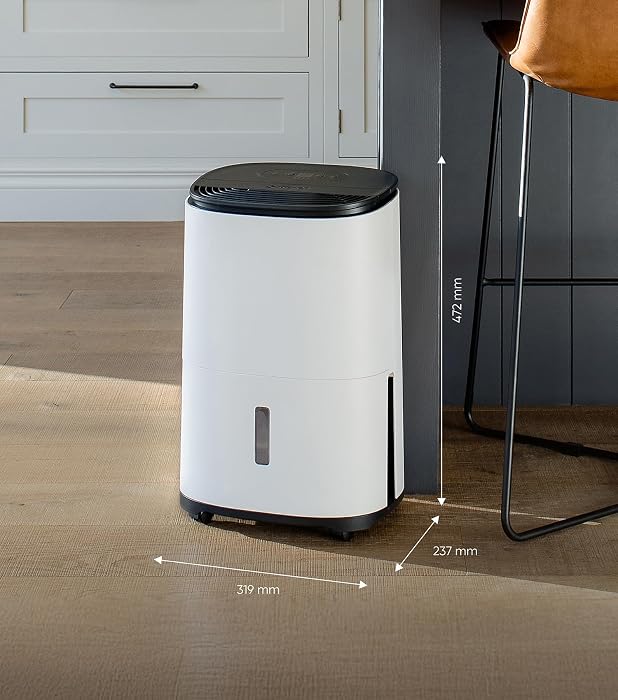

The Meaco Arete One 12L is the sort of dehumidifier that makes sense once you have to live with one rather than simply compare specifications. We used it for laundry nights, condensation and background winter humidity in a small home, where noise and floor space matter almost as much as how much water it can collect.
Our main takeaway is simple: the Arete One 12L is not the cheapest way to remove moisture, but it is one of the easier dehumidifiers to live with day after day.
That distinction matters in a flat. A machine can have an impressive extraction figure and still be irritating enough that you stop switching it on.
Noise
Noise is one of the strongest reasons to choose the Arete One.
Meaco rates the 12L model at 35 and 38 dB(A), depending on fan speed. Those figures are useful, but what matters more is how the sound behaves in a real room.
On the lower setting, we could comfortably talk, watch television or work in the same open-plan space without constantly noticing it. You can still hear the fan and compressor, and there is an audible change when the compressor starts or stops, so “silent” would be misleading.
Civilised is a better description.
That makes the Arete particularly appealing if your only practical position for a dehumidifier is in a living room, hallway or bedroom rather than behind a utility-room door.
Night mode is useful for the same reason. It reduces unnecessary lights and sounds rather than turning the machine into something genuinely inaudible.
Laundry
If you regularly dry clothes indoors, Laundry Mode is one of the best reasons to own the Meaco Arete One 12L.
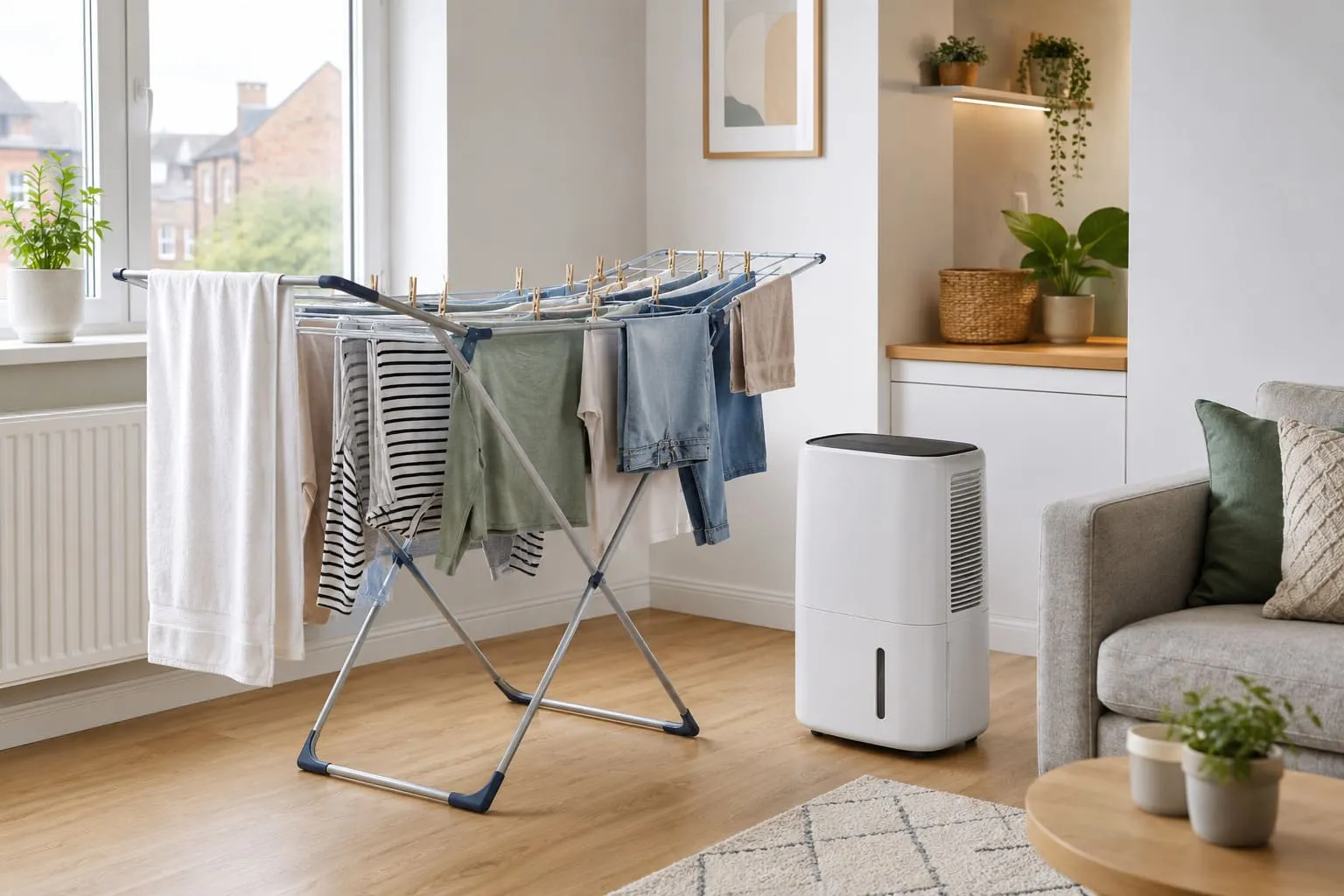
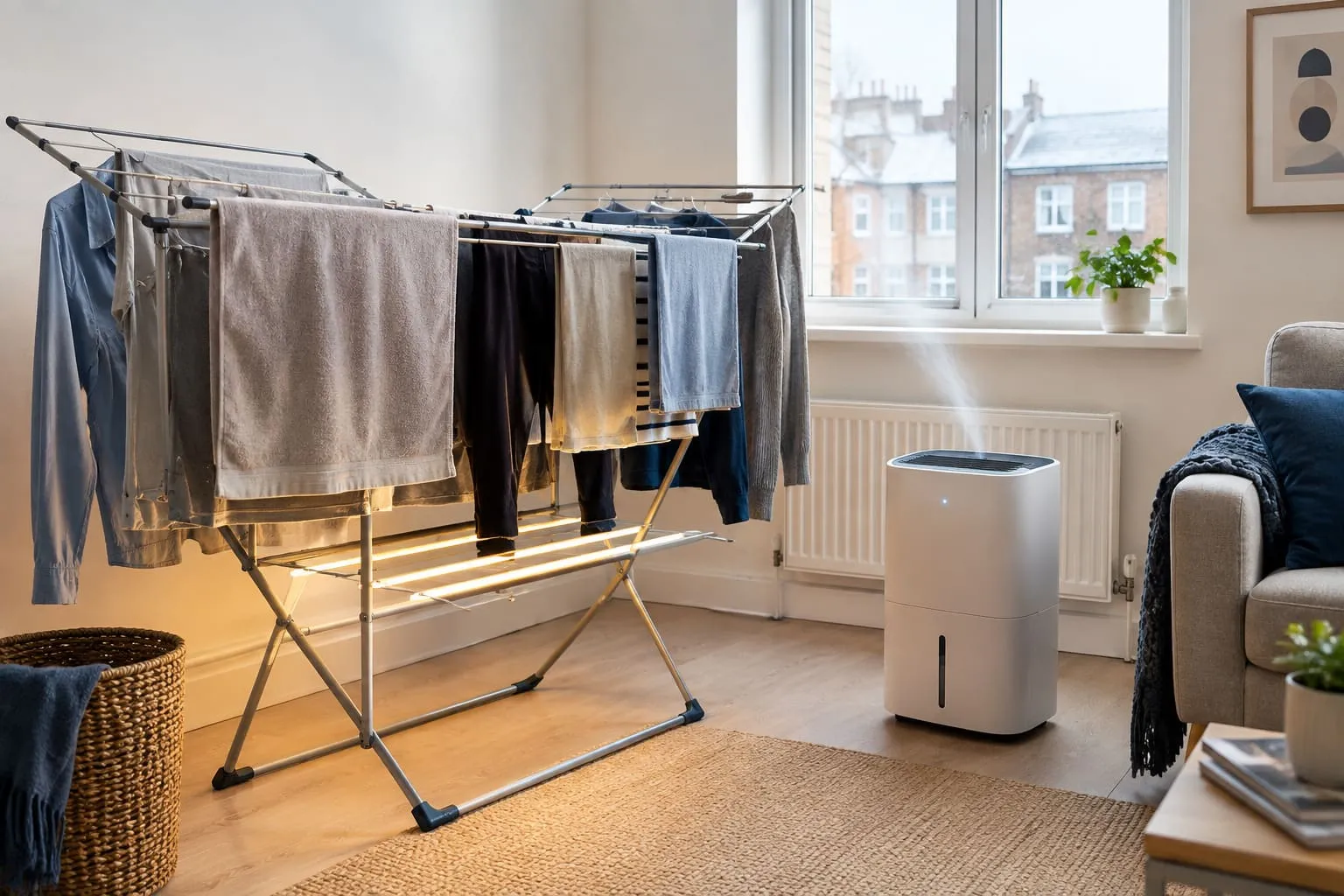
Our preferred setup was simple: put the clothes on an airer, give the washing a good spin first, close the room as much as practical and run the dehumidifier nearby with space for air to circulate.
The difference compared with simply leaving wet clothes on an airer is not just drying speed. The Arete is collecting some of the moisture that would otherwise end up in the room, on cold windows and potentially on external walls.
Shirts, children’s clothes and lighter fabrics are where the setup feels easiest. Thick towels, jeans and tightly packed loads still require patience, especially if the room is cool.
Airflow matters too. Hanging twice as many clothes on the same airer does not magically make the dehumidifier twice as productive. Spacing garments so that dry air can move between them usually works better than creating one dense wall of wet fabric.
The dedicated laundry cycle runs for six hours before switching itself off, which is convenient if you do not want the machine running indefinitely.
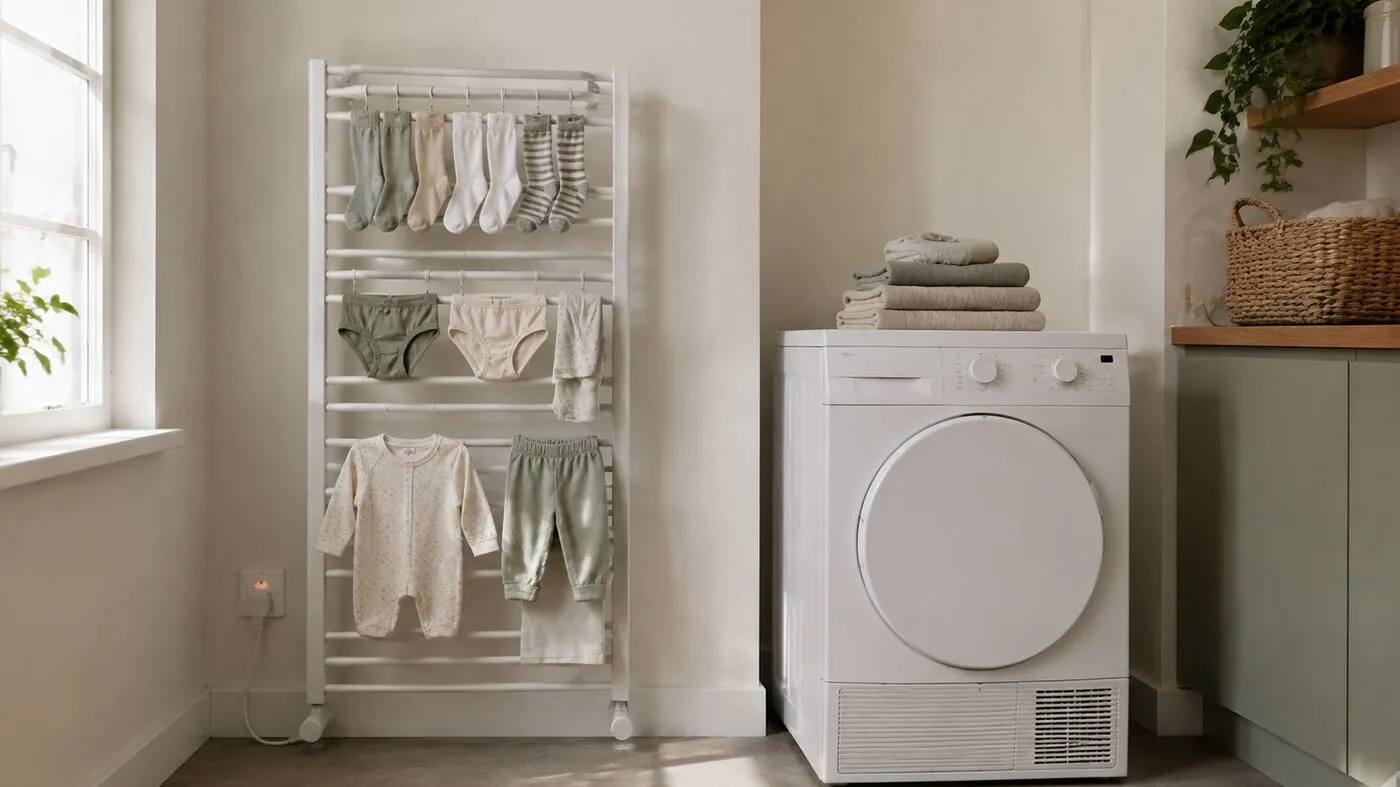
If indoor laundry is a routine part of winter rather than an occasional emergency, see our best dehumidifiers for drying clothes guide for the other models we would consider.
Condensation and everyday humidity
The Arete One is arguably even better as an everyday humidity-control appliance than as a dedicated laundry machine.
Instead of repeatedly switching it on only when the windows are already dripping, you can set a target humidity and let the machine manage the room in the background.
That is the behaviour we prefer in a small home.
You do not necessarily want maximum extraction every minute of the day. You want indoor humidity kept under control without having to think about the appliance constantly.
This is also where buying a quieter machine starts to make more sense. A cheaper dehumidifier that spends most of winter switched off because nobody likes listening to it is not much of a saving.
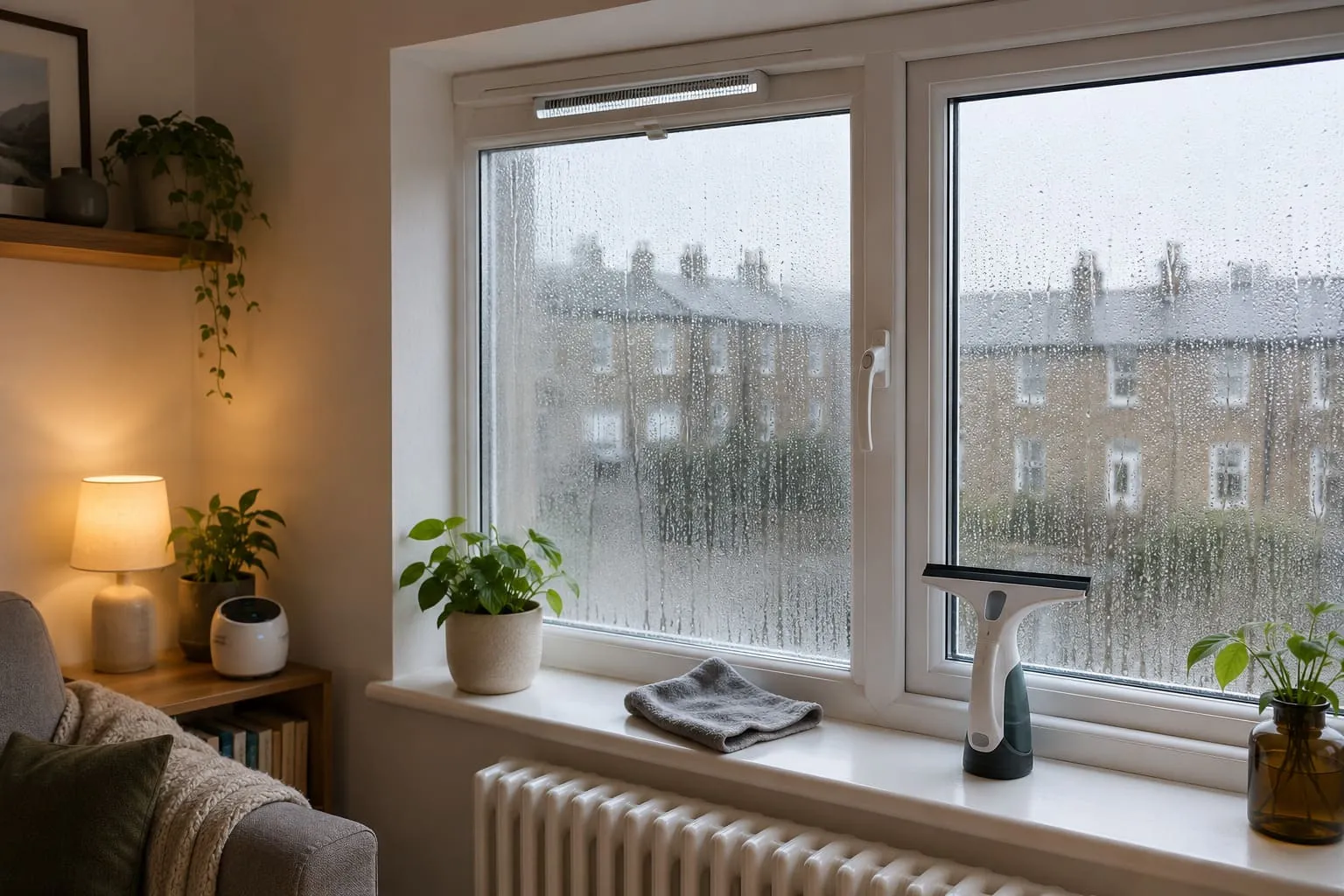
If wet windows are your main problem, our guide to stopping condensation in a UK flat covers the other things worth checking alongside a dehumidifier.
Do not expect 12 litres every day
The “12L” in the product name needs some context.
It is a maximum extraction rating under warm, humid test conditions rather than a promise that you will empty 12 litres of water from the machine every day in a British home.
Meaco’s own performance data shows the 12L model extracting around 5.23 litres per day at 20°C and 60% relative humidity, compared with its maximum-rated output in much warmer and more humid conditions.
That does not make the specification misleading; it is how dehumidifiers are commonly rated. But it is useful to understand when comparing models.
In a cool bedroom with moderate humidity, expect considerably less water than the headline number.
What matters is whether the machine can bring the room towards the humidity level you want and then maintain it efficiently.
Tank and moving it around
The water tank holds 2.5 litres.
For a relatively compact dehumidifier, that is reasonable, but anyone drying laundry regularly should expect to empty it. There is also no handle on the tank, which is a small usability weakness on a machine that otherwise feels thoughtfully designed.
If you have somewhere suitable for the hose, continuous drainage removes the problem almost entirely.
The machine itself weighs 10.9 kg. We would not describe that as lightweight, but the built-in castors make moving it around one level of a home much easier.
That suited the way we actually used it: near the bedroom when condensation was the problem, then closer to the clothes airer when laundry became the priority.
Another small-home advantage is that the Arete design can sit close to a wall rather than demanding a large empty space behind the machine. When floorspace is already limited, those few centimetres are genuinely useful.
Air purification
The Arete One also includes a HEPA filter, so it can filter airborne particles while moving air through the unit.
We see this as a useful extra rather than the main reason to buy it.
If your primary problem is humidity, having one appliance handle dehumidification and some air filtration is convenient. It also avoids adding another box to a small room.
We would not buy the Arete solely because we wanted a dedicated air purifier, but the filtration makes a good dehumidifier more useful.
Running costs
The 12L Arete One is a compressor dehumidifier with a quoted power consumption of 151 watts at 20°C and 60% relative humidity.
The important point is that a humidistat-controlled dehumidifier does not necessarily draw that continuously. Once the target humidity is reached, the machine can cycle rather than trying to extract water at maximum power forever.
That is why we prefer using humidity control rather than simply leaving a machine on its most aggressive setting all day.
Actual electricity cost depends on your tariff, room temperature, humidity and how frequently the compressor needs to run.
For laundry, the calculation is also slightly different. The goal is not simply to use the fewest watts possible; it is to remove the water from the clothes and room efficiently enough that the machine can be switched off.
What it will not do
The Arete One 12L is a compressor dehumidifier, and that brings limitations.
It would not be our first choice for a very cold, unheated garage or freezing box room. Compressor models become less productive as temperatures fall. Meaco rates the unit for operation from 5°C to 35°C, but its own extraction figures demonstrate how much less water it removes in colder conditions.
A desiccant dehumidifier can make more sense if your main problem is a persistently cold space.
A dehumidifier also cannot repair the source of water entering your home. It will not fix a leaking window, failed seal, penetrating damp or plumbing problem.
And it should complement proper ventilation rather than replace it. Bathroom and kitchen extractors still have a job to do.
What we like
The biggest strength is not any single headline specification. It is the combination.
The Arete One 12L is quiet enough to share a room with, compact enough for a flat, easy to move on its castors and powerful enough for the sort of condensation and indoor-laundry problems many UK homes face.
Laundry mode is useful rather than gimmicky, while humidity control means it can spend the rest of winter quietly managing moisture in the background.
The HEPA filter is a welcome bonus, especially when space makes owning several separate appliances inconvenient.
What we would change
The 2.5-litre tank is not enormous, and the lack of a tank handle feels unnecessarily awkward at this price.
It is also important to buy the 12L model for the right space. If you have a larger home, several persistently damp rooms or huge amounts of washing, stepping up to a larger-capacity model may make more sense than expecting the 12L to work harder.
And this is not a budget dehumidifier. Part of what you are paying for is refinement: lower noise, sensible controls and a design that is less annoying to live around.
If the machine will only come out for a few exceptionally wet weeks each year, spending less can be perfectly rational.
Verdict
The MeacoDry Arete One 12L is a very good dehumidifier for small UK homes, particularly if condensation and indoor laundry are recurring winter problems.
Its biggest advantage is how unobtrusive it is. Plenty of dehumidifiers can collect water. Fewer are quiet and convenient enough that you are happy to leave them working in the room where you actually live.
That is why we like the Arete One.
For a small flat or modest house where the machine will regularly share living space with you, paying extra for the quieter design makes sense. Laundry mode, automatic humidity control, castors and HEPA filtration turn it into something you can use throughout winter rather than an appliance you drag out only when the windows start dripping.
If you only need a dehumidifier for a month of emergency drying, start cheaper.
If indoor drying and condensation are part of your normal winter routine, the Arete One 12L is the sort of machine we would rather live with.