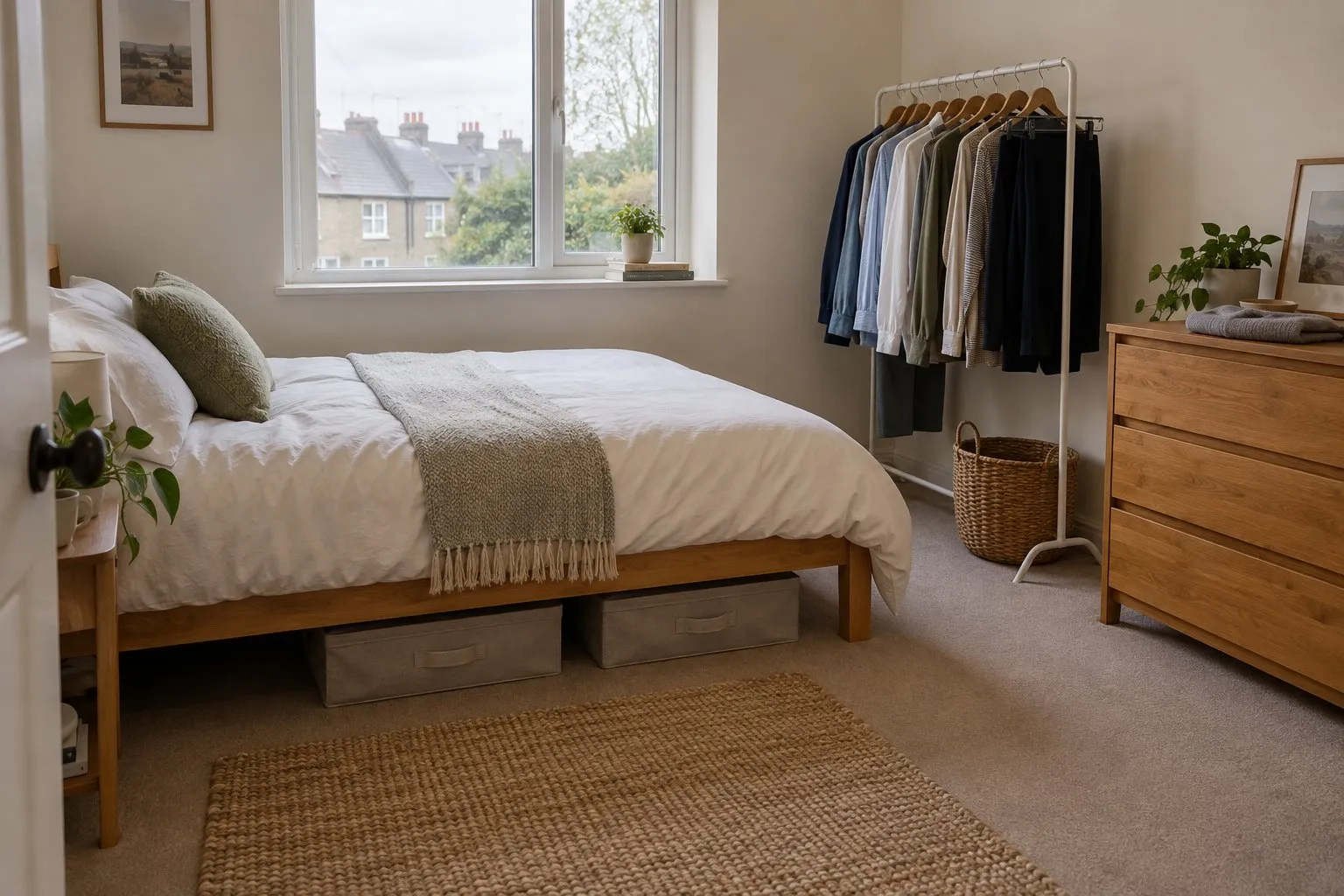
Clothes storage without a wardrobe works best when you give hanging clothes, folded clothes and seasonal clothes different places. A single open rail rarely solves all three needs, and filling the floor with boxes can make a small bedroom harder to use.
Start with the clothes and furniture you already have. Work out what genuinely needs a hanger, what can go in a drawer or basket, and what you will not wear this season. Then fit those groups around the bed, doorway and space you need to get dressed.
This is a practical, product-neutral guide for compact UK bedrooms. The arrangements below are editorial suggestions informed by published care and safety guidance, not claims from hands-on testing.
Clothes storage without a wardrobe: choose your starting layout
| What your room and clothes need | A useful starting arrangement | Check first |
|---|---|---|
| Mostly shirts, jackets or dresses | A short rail and a small folded-clothes area | Loaded depth, garment length and rail stability |
| Mostly T-shirts, jeans and knitwear | Drawers or shelf baskets with limited hanging space | Drawer opening space and comfortable shelf reach |
| Very little spare floor space | Existing shelves and accessible under-bed containers | Bed supports, pull-out space and bending or lifting needs |
| A room that also serves as an office | Enclosed folded storage beside a modest rail | Chair movement and access to both clothes and desk |
| Shared bedroom storage | A defined rail section and folded-storage area per person | Whether either person has to move the other’s things |
Use the table to choose a starting point, rather than trying to fit every storage format into the room. If your daily clothes fit comfortably in existing drawers, there is no reason to add a large rail for a few occasional outfits.
1. Sort by how clothes need to be stored
Empty one manageable section at a time. Make three groups:
- Hang: items whose shape or creasing makes hanging useful, such as suitable shirts, jackets and dresses.
- Fold: everyday T-shirts, jeans, underwear, sleepwear and knitwear, following garment care advice.
- Store separately: clean, dry clothes you are keeping but will not need regularly this season.
Set aside anything awaiting washing, repair or a decision. Otherwise, a new storage arrangement simply absorbs the same unfinished pile.
Avoid treating every garment as a hanging item. The Canadian Conservation Institute’s textile-care guidance advises against hanging knit garments. Fold jumpers with their weight supported instead of stretching them over hangers.
Count the garments that remain in the hanging group. A room used mainly for folded casual clothes needs a different balance from one storing office shirts and long dresses. There is no useful universal rail length for both.
2. Measure the space needed to use the storage
A unit fitting between the bed and wall is only the first check. Measure its working space too.
For a rail, include the feet, hanger width and sleeves projecting beyond the frame. Hang your longest garment from an existing hanger and measure the drop, so a lower shelf or box will not bunch its hem. Check the maximum load and any installation requirements in the rail’s instructions.
For drawers, allow room to pull them open and stand in front. For a shelf basket, check that you can lift it out without hitting the bed or another shelf. For under-bed storage, measure the lowest clearance and the gaps between support legs, then check the route out into the room.
Test the proposed footprint with a tape measure and an empty box while you are there. Walk from the bed to the door, open nearby doors, and try the movement you would use to retrieve clothes. Remove the trial box afterwards.
If you use a mobility aid, or bending and lifting are difficult, make reachable daily storage the priority. Space under the bed has little value for socks if getting them out each morning is a struggle.
3. Give the rail a limited job
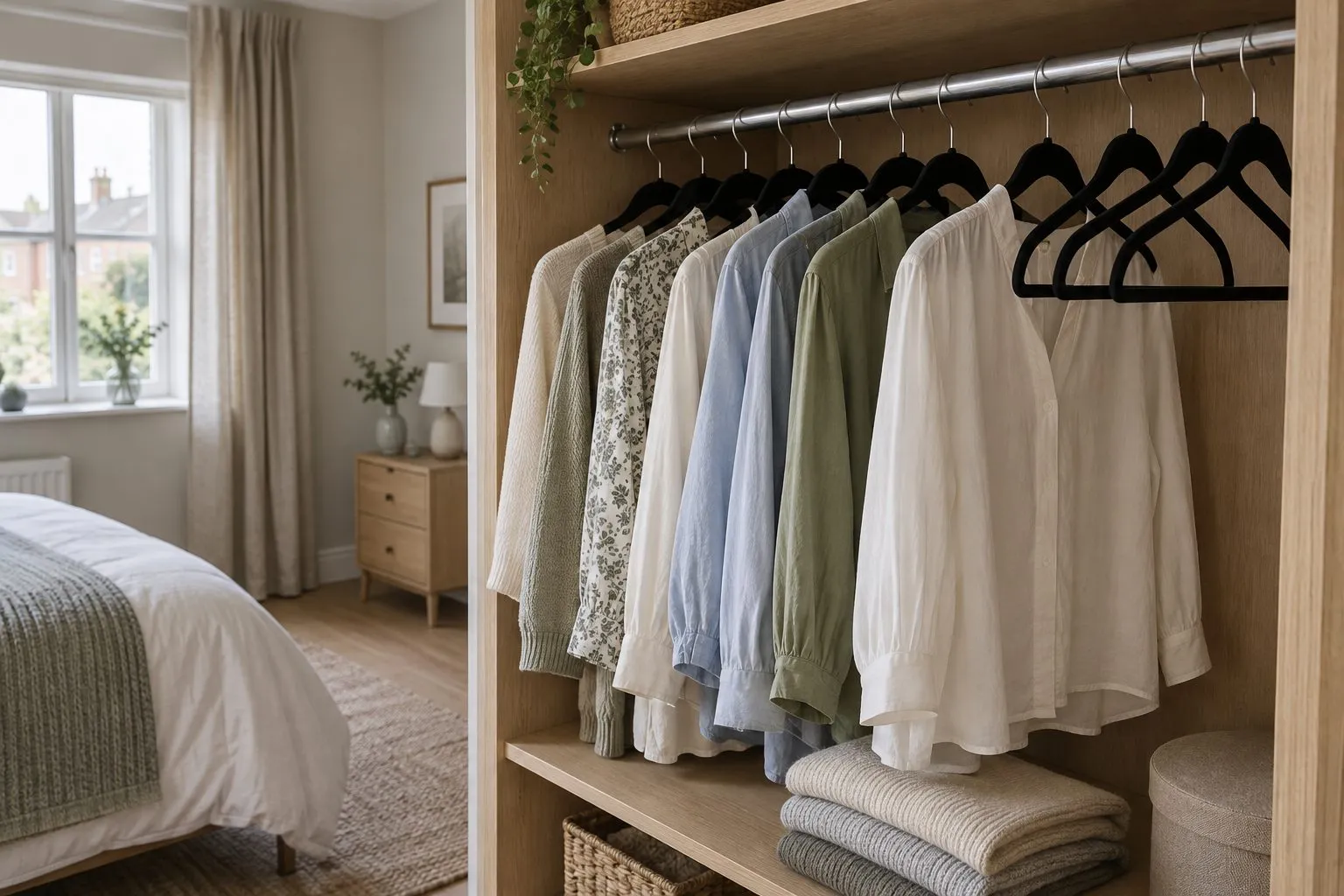
Use an open rail for the clothes that benefit from hanging. Leave enough room to remove one hanger without dragging neighbouring clothes off with it.
Arrange by garment type or by person, whichever makes getting dressed easier. Keep long items together so you can see whether the space below shorter garments is genuinely usable. Do not fill that gap with boxes if they stop you reaching the rail comfortably.
An open rail also needs ordinary cleaning access. If its base becomes surrounded by shoes, bags and laundry, you will have recreated a crowded cupboard without the doors.
For occasional garments, a suitable loose garment cover can help limit dust. Place the rail away from prolonged direct sunlight. These care principles are supported by the textile guidance linked above; the right cover still depends on the garment and the conditions in your room.
4. Make folded clothes easy to see
Use existing drawers before adding furniture. Separate small categories with containers you already own, provided they are clean, smooth and fit without snagging fabric or jamming the drawer.
T-shirts can be folded upright in a row if that lets you see them at a glance. Keep heavier knitwear in manageable stacks with its weight supported. There is no requirement to use one folding method for everything.
On open shelves, a basket or box per category makes retrieval simpler than a deep mixed pile. Put frequently used items within easy reach. Leave enough space above a basket to grip it properly, and avoid stacking daily clothes behind other containers.
Give the storage a capacity you can maintain. If a drawer closes only when you force it, remove or relocate some contents before adding another divider.
IKEA’s furniture safety guidance explains anchoring and the need for fixings suited to the wall. This is relevant even when a chest of drawers looks low or solid.
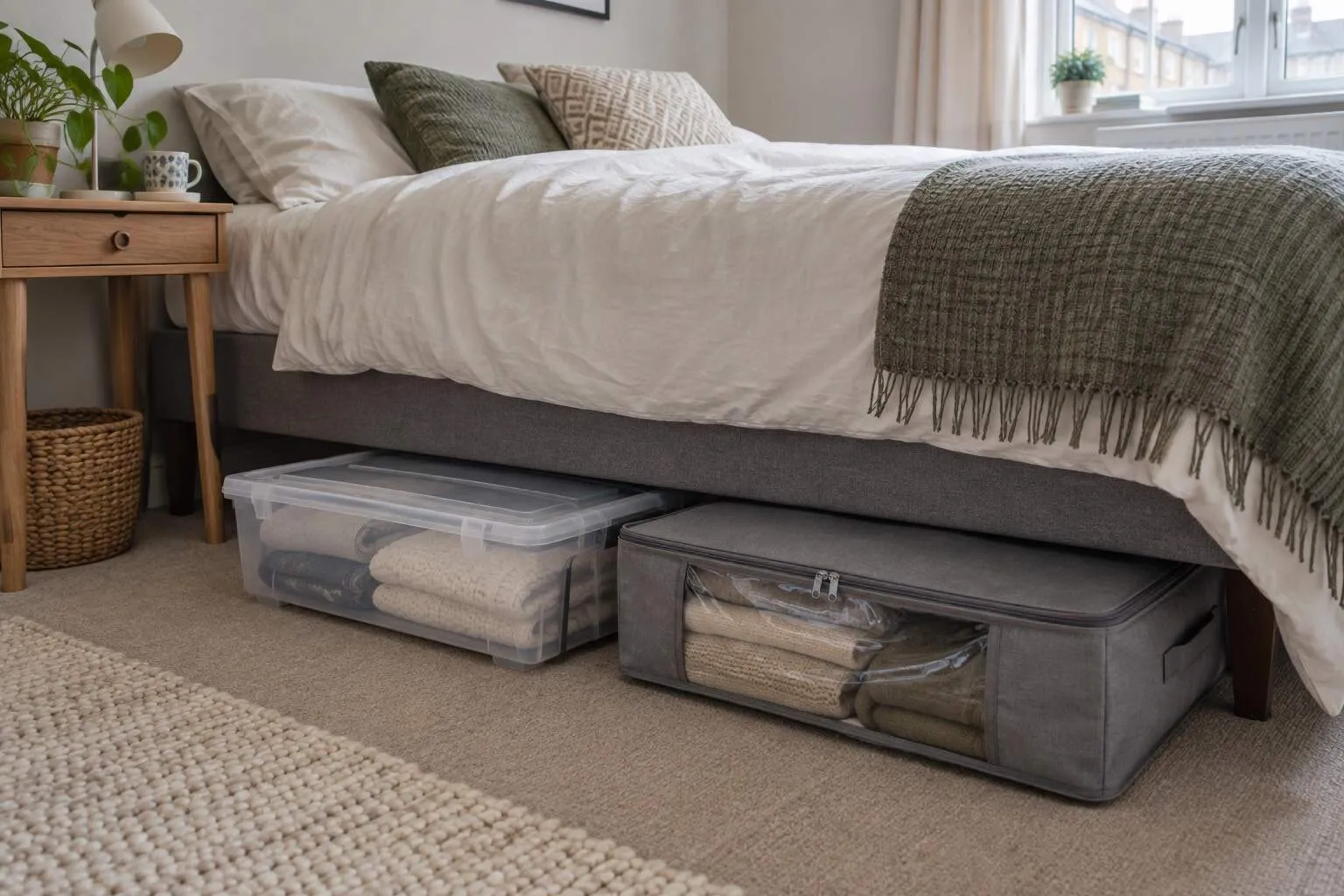
5. Use under-bed space according to access
The easiest under-bed position can hold clothes you reach regularly. A section behind a support leg, or on the side of the bed against the wall, is better reserved for things you seldom need.
Give each container one clear purpose: summer clothes, spare sleepwear or occasional outfits, for example. Label the side you can see when the container is in place. Avoid a single deep bag containing unrelated items that must be unpacked to find anything.
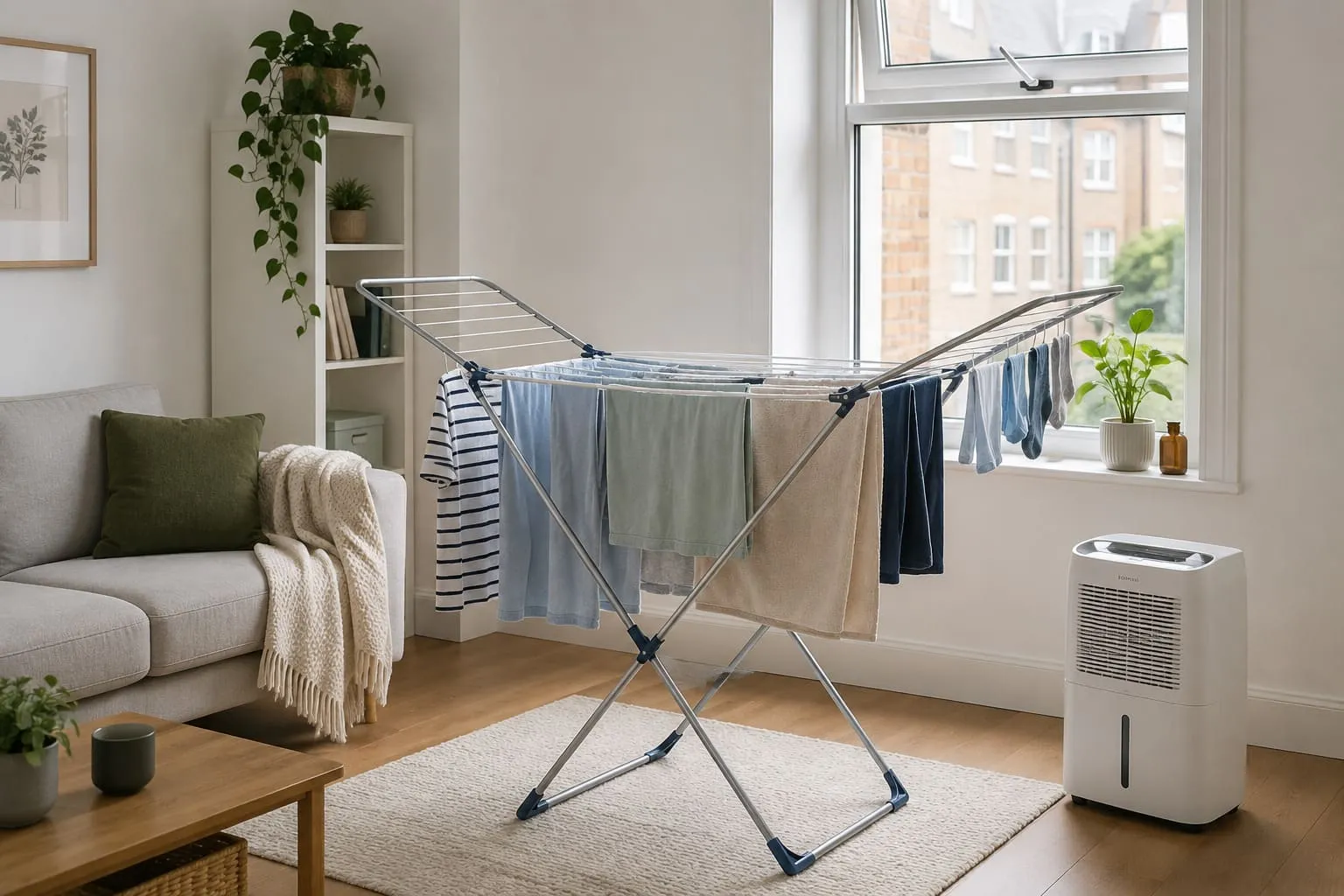
Only put away clothes that are clean and fully dry. Do not use a zipped bag to hide washing that still feels damp at a waistband or seam. If getting laundry dry is the problem, start with our guide to drying clothes in a flat without a tumble dryer.
Keep containers clear of moving bed mechanisms and follow the bed manufacturer’s ventilation instructions. Pull them out periodically to clean beneath the bed and check their condition. A dusty or musty corner needs attention, even when the container itself looks tidy.
6. Create a place for clothes you will wear again
The chair covered in half-worn clothes often exists because everything is expected to be either freshly clean or ready for washing. Give dry, wearable-again clothes a small separate place: a section of an existing rail or a suitable existing hook.
Keep this area deliberately limited. It is for a few items you intend to wear again soon, not a second seasonal store. Move dirty clothes into the laundry basket and let damp outerwear dry appropriately before storing it.
If you use hooks, check the garment’s hanging loop and the hook’s installation and load instructions. Heavy knitwear is better supported folded than left hanging from a small point.
7. Keep the arrangement suitable for a rental
Start with existing furniture, shelves and sound fixings. If you need to add wall-mounted rails or shelves, check permission and arrange suitable installation for the wall and intended load.
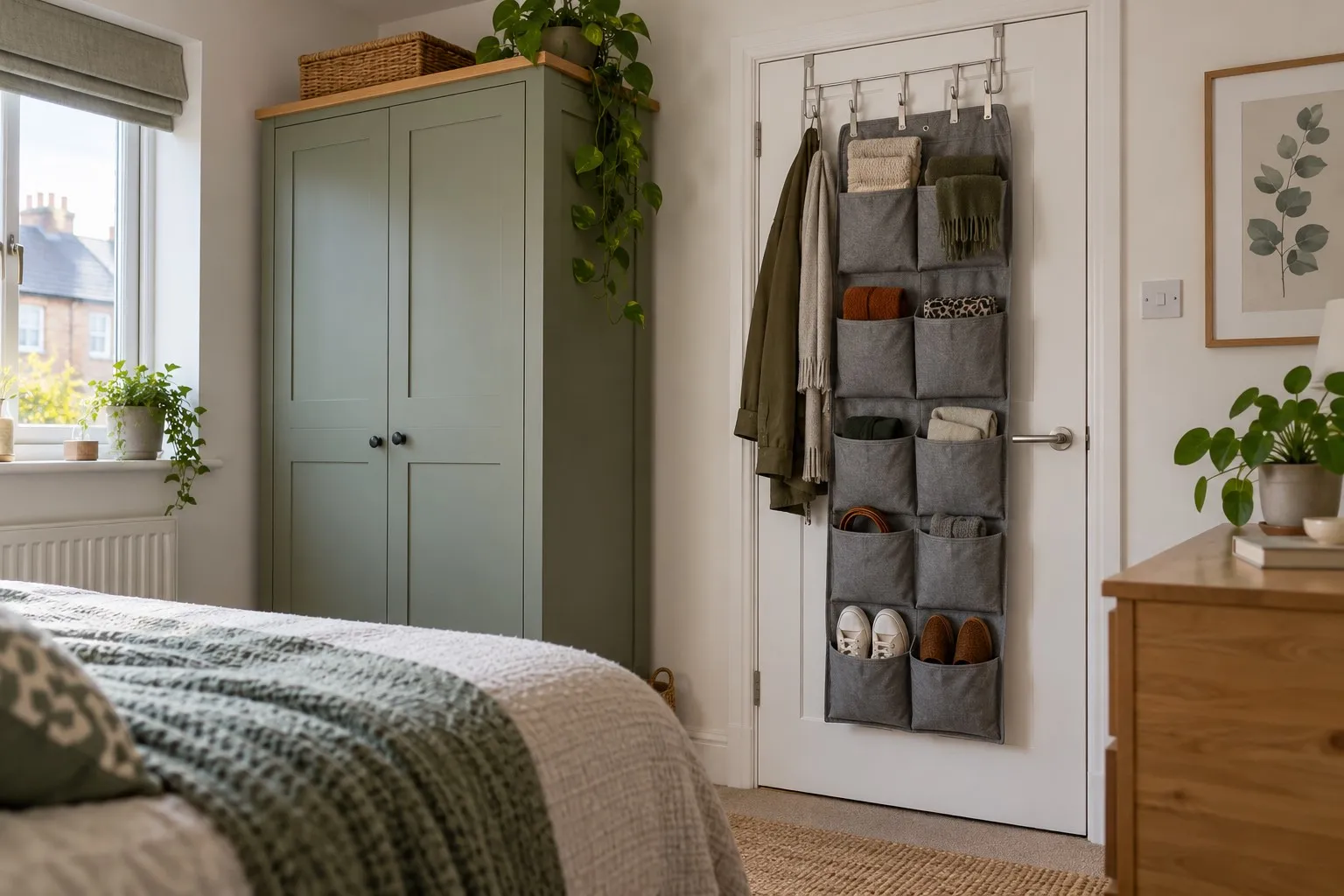
Do not assume a tension rail, removable hook or over-door fitting can carry a collection of clothing simply because it needs no drilling. Follow the exact fitting instructions and limits. Avoid hanging organisers on doors where they interfere with closing or fire-safety features.
Hiding an open rail behind a curtain is optional. It adds fabric and needs its own safe support, so check that it will not trail across the floor, catch on the door or sit close to a heater. First get the storage working without the screen.
8. Check damp, airflow and heat before filling a corner
Leave a gap between storage furniture and external walls, and avoid pressing clothes against a cold or damp surface. Keep existing vents unobstructed. Government damp and mould guidance supports these airflow measures while stressing that underlying causes need addressing.
There is no single furniture gap that guarantees a dry bedroom. Conditions vary with the building, wall temperature, ventilation, heating and moisture generated indoors. Check behind storage and inside less-used containers, particularly if the room has recurring condensation.
If damp or mould returns, report it to your landlord or arrange investigation if you own the home. Moving clothes or buying sealed boxes does not repair a leak or solve a building defect. Our guide to condensation in a UK flat explains the wider moisture problem.
Keep rails, loose clothing, curtains and storage furniture well away from portable heaters. London Fire Brigade advises keeping combustible furnishings away from heaters and never using them to dry clothes. Follow the heater’s clearance instructions and preserve a clear route to the door.
Try the arrangement through a laundry cycle
Before adding more storage, see what happens when the clean washing returns. Can you put it away without rearranging the room? Can you find an outfit without emptying a container? Does the bed-to-door route remain clear?
If the rail is overloaded, move suitable items into folded storage. If an under-bed box is used every day but difficult to reach, give its contents a better position. If clothes keep landing on the chair, reconsider the wearable-again space.
Aim for a layout that is easy to use when you are tired or in a hurry. A modest amount of accessible storage will serve a small bedroom better than a larger arrangement you have to dismantle every morning.