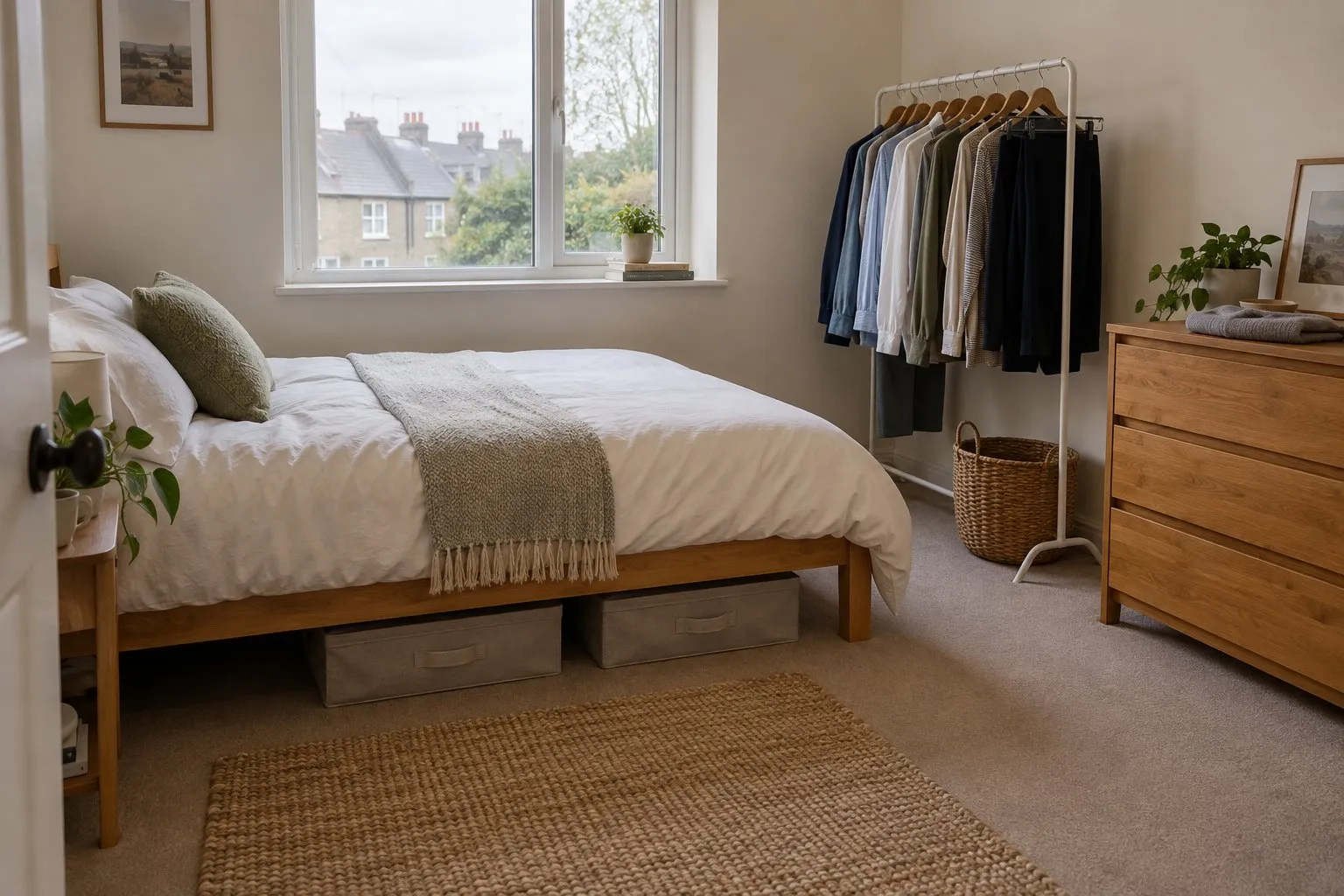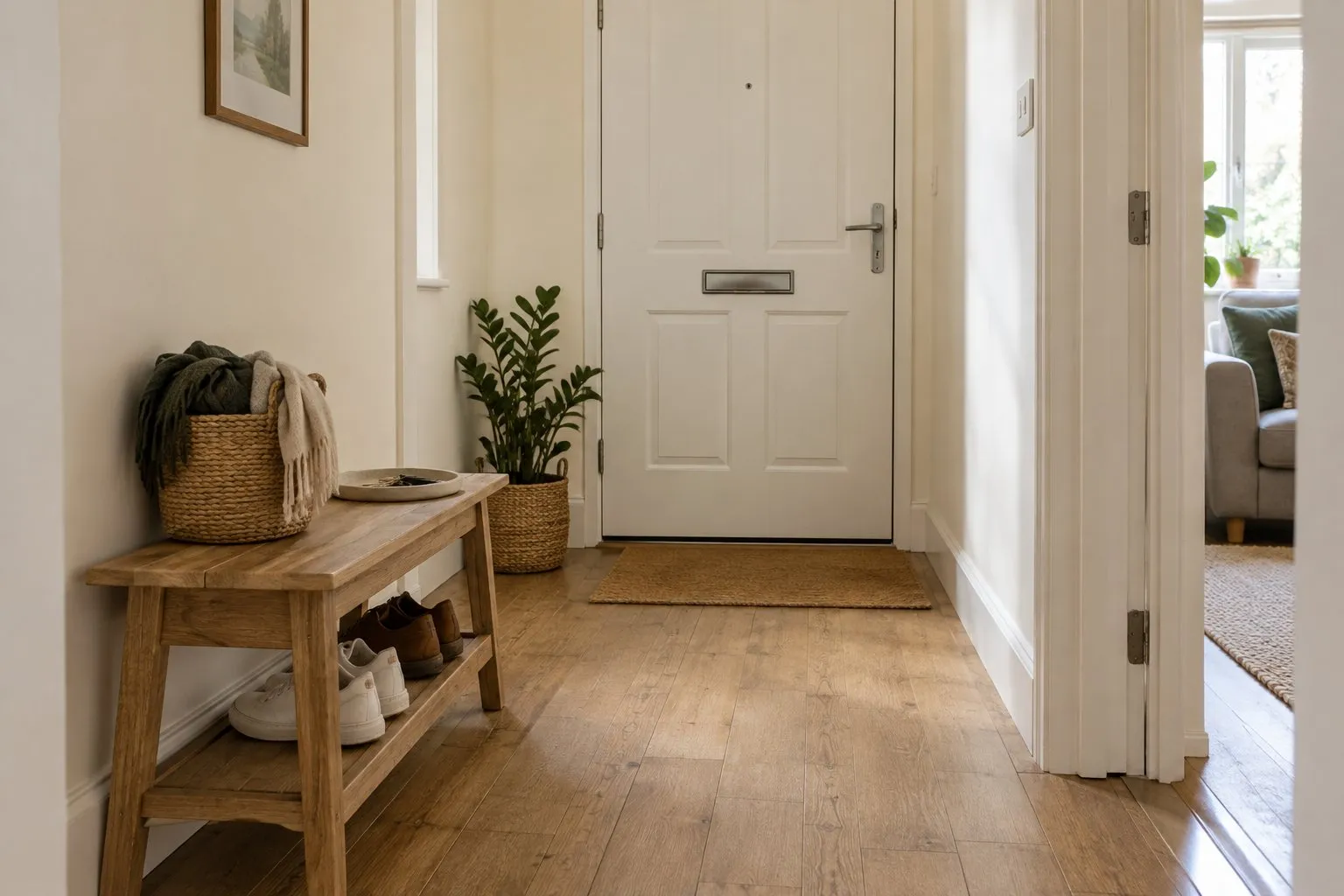
The most useful hallway storage ideas for renters start with what comes through the door each day: shoes, a coat, a bag and keys. Give those things a manageable place before adding another piece of furniture.
A small rented entrance has two limits: the space you need to move through it, and the changes you can make to the property. A rack that fits against the wall may still obstruct the door. A hook that needs no screws may still pull away paint when you move out.
This guide covers product-neutral ways to organise the private hallway inside your home. It draws on published safety and installation guidance, rather than hands-on product testing.
Hallway storage ideas for renters: choose by the space you have
| Your entrance | Start with | Check before using it |
|---|---|---|
| Almost no spare floor space | Keys on an existing surface in the next room; coats in a cupboard | The arrangement is convenient enough to use every day |
| A shallow recess inside the flat | A low shoe rack or shoe tray | Full footprint, protruding shoes and any required wall fixing |
| An existing hallway cupboard | Loose baskets on shelves and grouped shoes below | Doors still close and services remain accessible |
| A suitable cupboard door | A light over-door organiser | Door thickness, top clearance, hinge capacity and full closure |
| A suitable sound wall finish | Removable hooks for small, light items | Surface compatibility, load limit, fitting and removal instructions |
There is no need to use every option. Solve the most irritating problem first, then see whether the entrance still needs more storage.
Check the route before choosing furniture
Open the front door and nearby doors fully. Look at the space used by handles, radiators and skirting boards, then walk through carrying a shopping bag. If anyone uses a mobility aid or pushchair, assess the route with that equipment too.
Measure the usable recess rather than just the wall length. Include the part of shoes, baskets or coats that will project beyond the storage itself. A low rack can appear shallow until adult shoes hang over its edge.
For a temporary layout trial, place an empty cardboard box where the proposed unit would sit while you check access. Remove it afterwards; do not leave the trial layout blocking the route.
Keep storage inside your home. London Fire Brigade’s guidance for blocks of flats says communal corridors and stairs must remain free of clutter. The landing outside your front door is not an overflow shoe cupboard.
For more help with the layout itself, see how to organise a narrow UK hallway.
Make one small shoe zone
Keep the pairs currently in regular use near the entrance and move occasional footwear to a bedroom or cupboard. Decide the limit from the space available, rather than buying a rack for every pair you own.
A loose shoe tray can contain drips and grit without needing a fixing. Put it fully out of the walking line, check that it does not slide on your flooring, and empty or wipe away collected water. Do not let footwear spill around it.
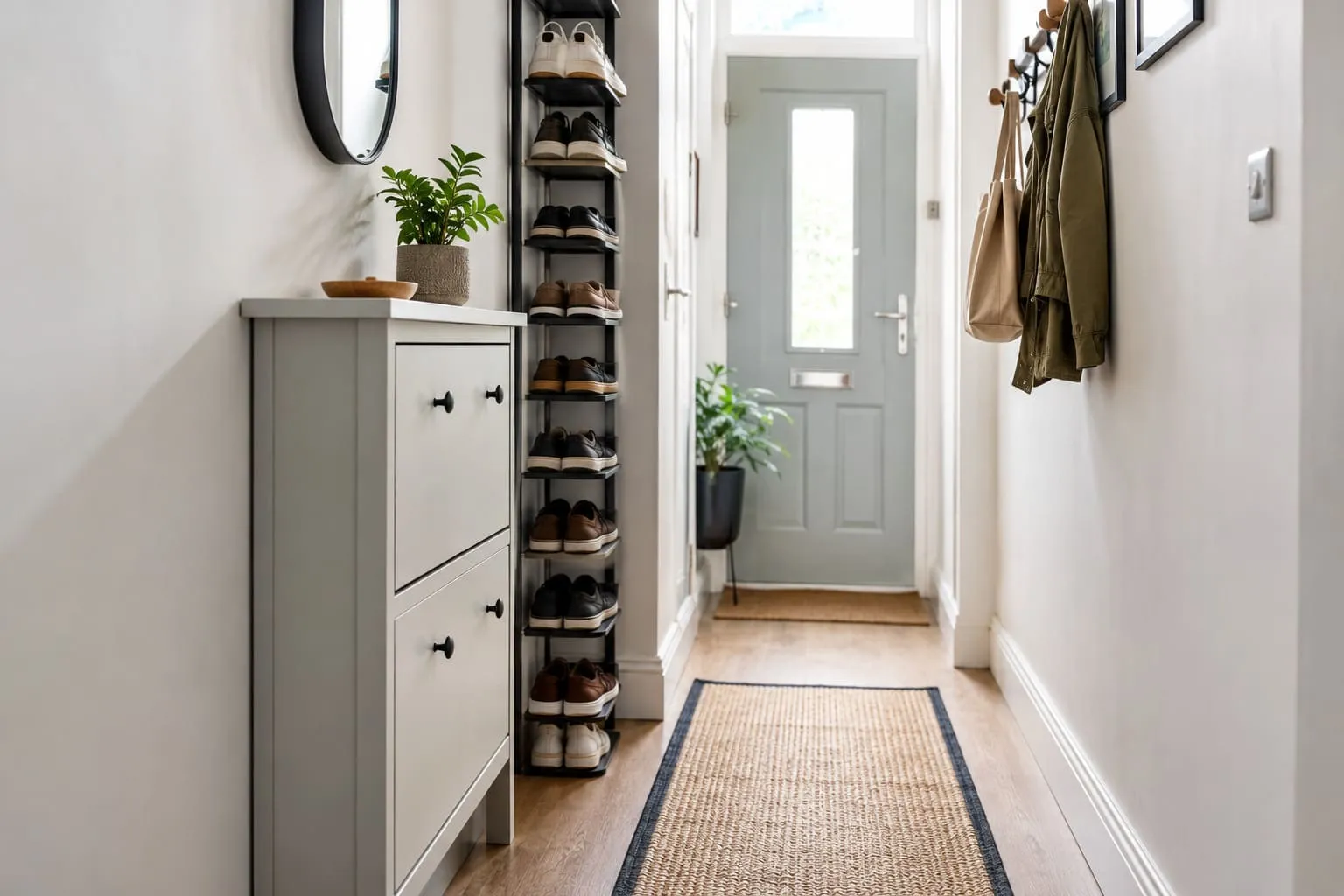
Where there is more room, a low open rack can make shoes easier to retrieve. Read the assembly instructions before buying: freestanding does not automatically mean safe without anchoring. If the instructions require a wall restraint, use that restraint with permission or choose a different storage format. Adhesive hooks are not a substitute for an anti-tip fixing. IKEA’s furniture safety guidance explains why securing furniture matters.
Use a bench for sitting only if it is designed and rated for that purpose. A shoe shelf or storage box is not necessarily a seat.
Put keys and post on a surface you already have
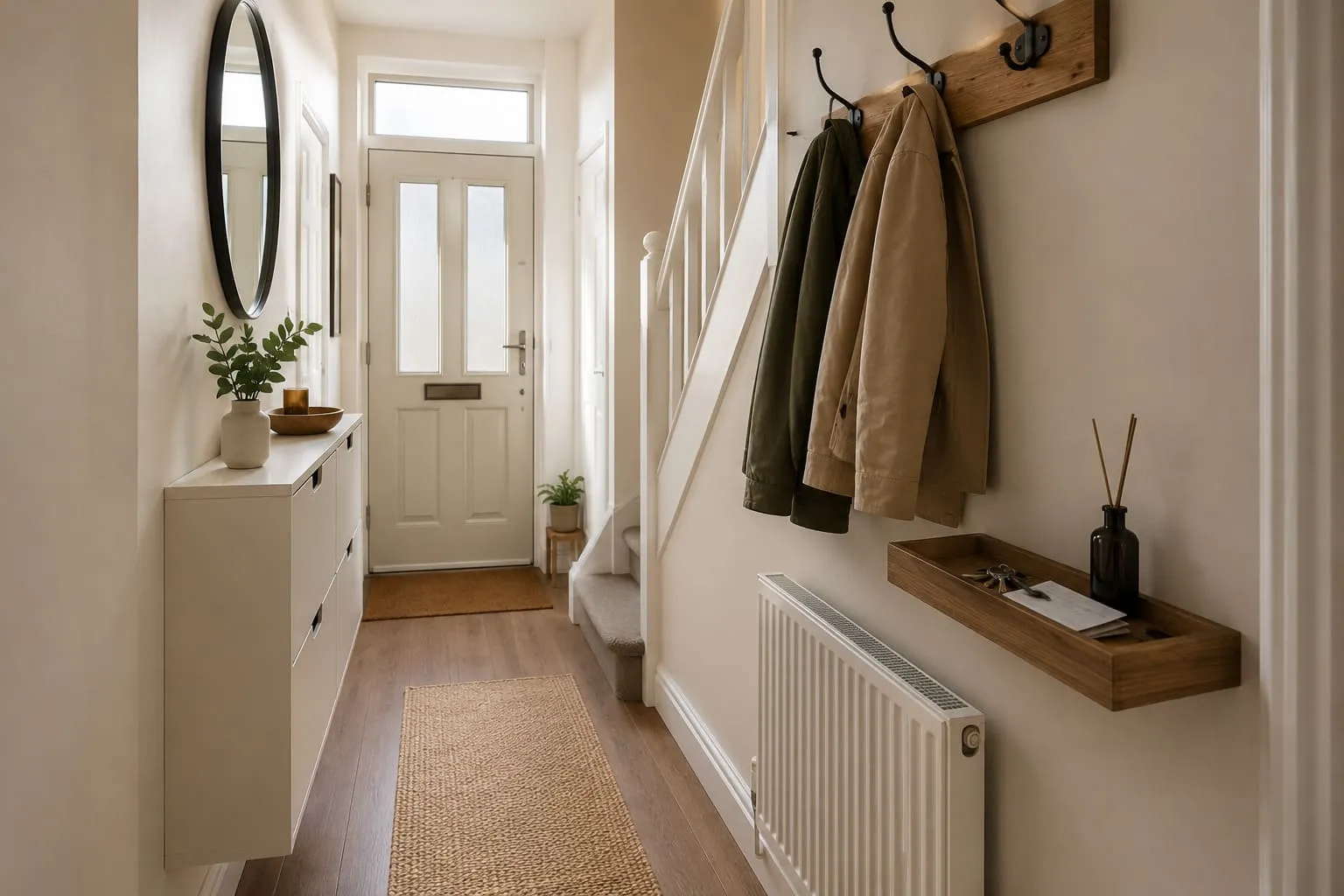
A shallow tray on an existing cupboard shelf, bench or nearby table can replace the need for a new console. Pick a spot that you pass naturally when coming in, with keys away from access through the letterbox or an open window.
Give incoming post a small, separate space. Open it regularly and move anything that needs action to the place where you handle paperwork. If the tray starts collecting spare batteries, old receipts and sunglasses, empty it before adding another container.
For a shared household, a small basket per person can help with gloves and reusable bags. Keep the baskets within existing storage rather than lining them along the floor.
Store fewer coats in the entrance
Bulky coats can take up more usable width than the rack supporting them. Keep the coat you are wearing in rotation accessible and move the rest to a wardrobe or existing cupboard.
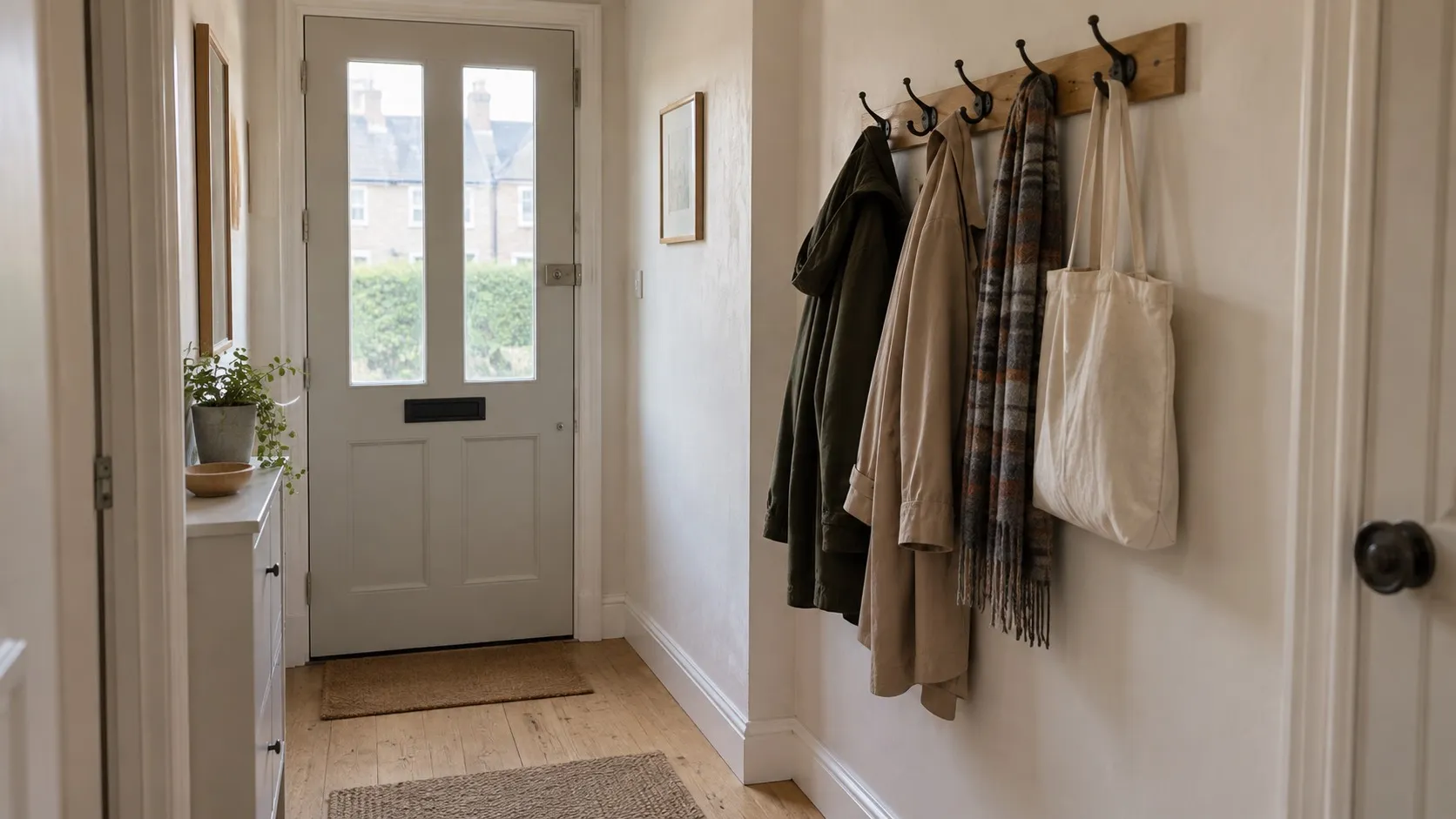
If you already have sound, suitable hooks, use them within their known capacity. Do not assume old fixings can take several heavy bags simply because they are still attached.
A freestanding coat stand needs space for its base and loaded branches. Check the manufacturer’s stability and loading instructions, and keep it out of the doorway. If it makes passing awkward, storing coats in another room is the more workable choice.
Let rain-soaked outerwear dry in a suitable ventilated place before packing it tightly into a cupboard. How quickly it dries will vary with the fabric, wetness, temperature and airflow; there is no useful fixed drying time for every flat.
Use removable hooks selectively
Removable adhesive hooks can be useful for light accessories where the surface and tenancy terms allow them. They are a conditional option, rather than a guarantee against marks or damage.
Check the exact instructions for:
- permitted wall finishes and the condition of the existing paint;
- surface preparation and any waiting time after decorating;
- the load limit for that particular hook;
- how long to wait after fitting before hanging anything;
- the direction and space needed for removal.
For example, 3M’s installation guidance excludes wallpaper and delicate or weak surfaces for the hooks covered by that guide. It also gives specific preparation, waiting and removal steps. Other fittings may have different requirements, so follow the packaging for the exact item you use.
Avoid peeling paint or an uncertain finish. Keep any release tab accessible and do not cover it with another object. If you cannot establish that the surface is suitable, use a loose tray or basket instead. Check with the landlord or agent when the tenancy instructions are unclear, and photograph the existing finish before fitting anything.
Be careful with over-door storage
A cupboard door can offer useful space for a light organiser, but only if it is suitable for the fitting. Check the door thickness, clearance above it and the space behind it. Include the loaded organiser’s depth and confirm the hinges can support the extra weight. Stop if the door catches or needs force to close.
Avoid hanging organisers from a flat entrance door or any fire door. London Fire Brigade explains that fire doors limit the spread of fire and smoke; hooks and stored items must not interfere with their closure, seals or hardware. Do not remove a closer or prop a door open to accommodate storage.
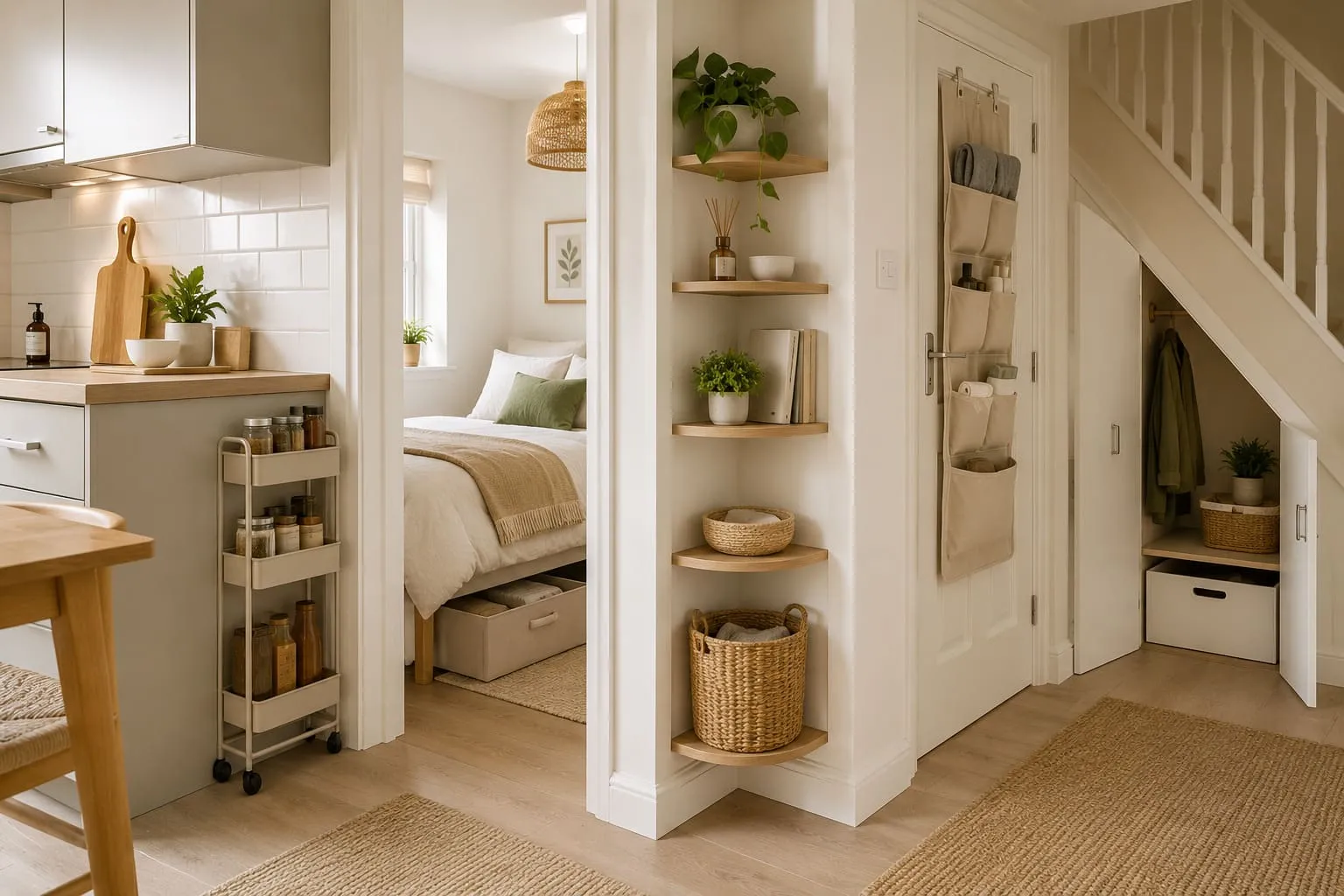
If a suitable cupboard door is unavailable, use baskets on its existing shelves instead. No-drill organisation does not have to involve hanging something up.
Use cupboards and adjoining rooms for overflow
Sort an existing cupboard into things you reach for daily and things you only need occasionally. Put daily items where you can see and retrieve them without unloading another basket. Leave access to meters, consumer units, controls and ventilation clear.
Seasonal scarves, spare shopping bags and occasional shoes can move further from the entrance. Do not seal away damp footwear or clothing; dry it first and check stored items periodically.
An adjacent bedroom shelf may be a better home for a bag than a hook that projects into a narrow hall. If you have a genuine recess elsewhere, our storage ideas for awkward spaces can help you assess it. Keep the same checks for access, stability and any required fixing.
Set up a routine you can keep
Start with the containers you already own. Give everyday shoes one place, choose a home for keys, and decide where coats will go. Try the arrangement through ordinary arrivals and departures before buying more storage.
At the end of the day, return shoes to their space, move bags off the floor and take processed post away. If objects repeatedly end up outside their allocated area, either reduce what lives there or move that category somewhere easier to reach.
Before moving out, empty the storage and follow the original removal instructions for any temporary fittings. Keep those instructions when you install them. A layout that leaves doors working properly, belongings easy to retrieve and the walking route clear is doing its job.